VG10 vs VG Max: Which Knife Steel Is Better?
If you want steel with better hardness and edge retention, VG Max outperforms VG10 thanks to its higher carbon and vanadium content.
You’ll get enhanced wear resistance and improved corrosion protection, especially in harsh environments.
VG10 remains strong in sharpness and ease of sharpening but may chip more over time compared to the tougher VG Max.
Choosing between them depends on your performance needs and budget. Explore deeper, and you’ll uncover their detailed alloy and durability differences.
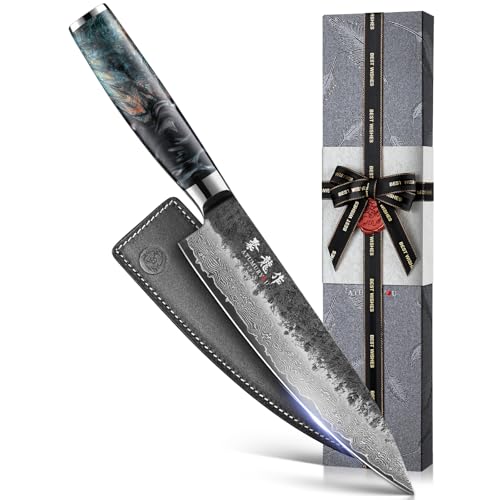
- 【Traditional Japanese Craftsmanship】Our chefs knife is crafted from premium Japanese VG10…
- 【67-Layer Damascus Steel】Damascus chef knife features 33 layers of Damascus steel on each side,…
- 【Fusion of Art and Ergonomics】The handle is an essential component of exceptional chef knives….
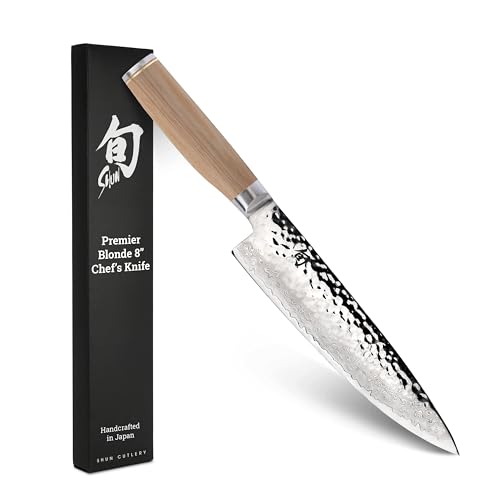
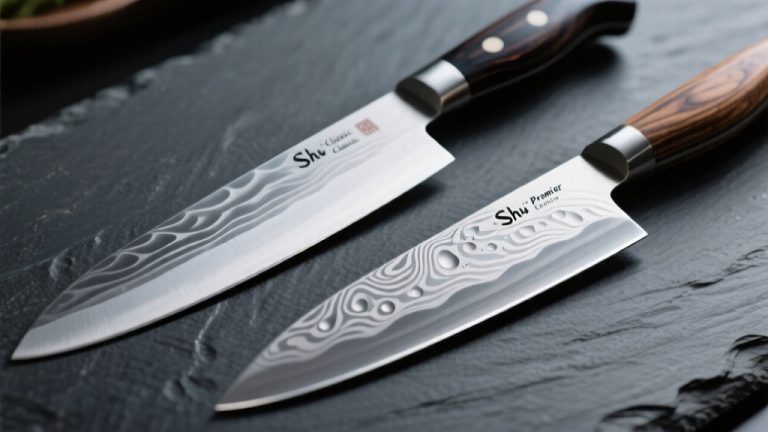
- JAPANESE CHEF KNIFE: The Shun Premier Blonde 8-inch Chef’s Knife is expertly designed for a variety…
- DISTINCTIVE HAMMERED FINISH: Part of the Premier Series, this knife features a beautiful hammered…
- SUPERIOR SHARPNESS: Crafted with VG-MAX steel and 68 layers of Damascus cladding, this knife…
Key Takeaways
- VG Max has higher carbon and vanadium than VG10, enhancing hardness and wear resistance.
- VG10 offers excellent sharpness with balanced toughness, while VG Max provides longer edge retention.
- VG Max improves corrosion resistance and pitting resistance due to refined microstructure and increased chromium.
- VG Max can be harder but risks brittleness if not heat-treated properly; VG10 maintains moderate toughness.
- VG10 is a cost-effective, widely accepted steel; VG Max targets professionals needing premium performance.
Understanding the Differences Between VG10 and VG Max Steel
| Feature | VG10 Steel | VG Max Steel |
|---|---|---|
| Carbon Content | High, but slightly lower | Higher carbon for more hardness |
| Edge Retention | Excellent | Superior long-term edge holding |
| Toughness | More forgiving, less brittle | Harder but may chip if poorly treated |
| Corrosion Resistance | Very good | Enhanced resistance in humid use |
| Sharpening Ease | Easier to sharpen and maintain | Requires more skill and time |
| Typical Use | Home cooks and enthusiasts | Professional-level performance |
| Cost Level | Affordable premium steel | Higher-end and exclusive |
Composition and Alloy Differences
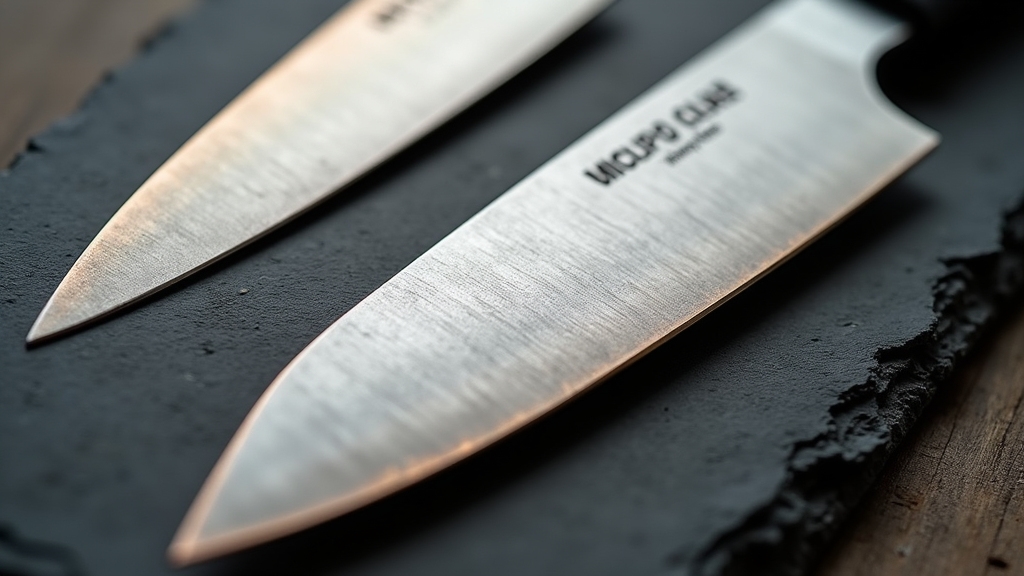
While VG10 and VG Max steels share a similar base composition of chromium, molybdenum, and cobalt, their differences in carbon and vanadium content considerably impact their performance characteristics.
You’ll notice VG Max contains slightly higher carbon (1.0–1.1%) compared to VG10 (0.95–1.05%), which increases hardness.
Vanadium content is also marginally elevated in VG Max, ranging from 0.2–0.3% versus VG10’s 0.1–0.3%. This enhances wear resistance through more pronounced vanadium carbide formation.
Chromium and molybdenum levels remain nearly identical, ensuring comparable corrosion resistance and strength. Both steels exhibit superior hardness around 60-62 HRC after proper heat treatment, contributing to their premium edge retention. Proper maintenance and conditioning with food-grade mineral oils can help preserve cutting tools made from these steels.
Both contain 1.0–1.5% cobalt, which strengthens the metal matrix and supports hardness.
These subtle compositional variances make VG Max a refined iteration of VG10, optimized for toughness and durability in high-performance cutting tools without altering the fundamental stainless steel properties.
Performance in Sharpness and Edge Retention
The subtle compositional differences between VG10 and VG Max directly influence how each steel performs in sharpness and edge retention. VG10, with its higher carbon and vanadium content, achieves edges within 60-62 HRC, allowing you to hone exceptionally acute, laser-like sharpness.
Both steels’ performance is also significantly affected by the quality of their heat treatment, which determines the balance of hardness and toughness. Regular maintenance with proper sharpening tools is essential to preserve these characteristics and ensure edge retention.
VG10’s higher carbon and vanadium enable edges at 60-62 HRC for exceptional, laser-like sharpness.
VG Max, enhanced with increased carbon and tungsten, offers a fine-grained structure that enables extremely sharp edges while potentially reaching higher hardness values. When it comes to edge retention, VG Max prioritizes wear resistance, maintaining sharpness longer under similar cutting conditions.
However, VG10’s balanced hardness and toughness provide good edge stability, though it may microchip slightly more over time. Both steels require skilled sharpening to preserve their ultra-fine edges, but VG Max tends to offer prolonged cutting performance, especially with proper heat treatment and use.
Corrosion Resistance and Durability
Because VG10 and VG-MAX steels incorporate varying amounts of chromium, molybdenum, and vanadium, their corrosion resistance and durability differ particularly under harsh conditions.
VG10, with about 15% chromium, offers good resistance but can suffer pitting in chloride-rich environments. Proper maintenance, including regular oiling, helps prevent rust and spotting.
VG-MAX enhances this by increasing chromium and refining its microstructure, reducing corrosion risk and boosting edge retention. Both VG10 and VG-MAX contain vanadium, which plays a crucial role in enhancing toughness and wear resistance.
Both rely on vanadium to improve toughness and wear resistance.
Yet VG-MAX’s higher carbon and tungsten content deliver superior hardness and durability.
You’ll appreciate these key points:
VG10 demands careful maintenance to avoid rust spots, especially in marine settings.
VG-MAX resists pitting better and handles cyclic stresses more effectively.
Both excel atmospherically, but VG-MAX outperforms in aggressive corrosive environments.
Toughness and Resistance to Chipping
Although VG-MAX can reach higher hardness levels than VG10, you should understand that increased hardness often compromises toughness. This makes blades more prone to chipping if heat treatment isn’t optimized. Proper maintenance and handling are essential to preserve blade durability and prevent damage.
VG10’s Rockwell hardness of 58-61 strikes a balance, offering moderate impact resistance and reliable edge retention. It has fewer chipping issues during typical kitchen use.
VG-MAX, enriched with carbon, vanadium, tungsten, and molybdenum, refines its grain structure and forms more vanadium carbides. This enhances toughness and reduces micro-fracturing risks. It also shares some composition similarities with VG-10, such as containing molybdenum and vanadium, which contribute to its enhanced properties steel composition.
However, without precise heat treatment, its increased hardness can increase brittleness. In practical terms, VG10 resists chipping under normal cutting conditions better.
VG-MAX demands careful thermal processing to maintain toughness and maximize chipping resistance during heavier or more demanding tasks.
Market Positioning and Consumer Preferences
When you compare VG10 and VG-MAX, you’ll notice distinct market positioning strategies that reflect their technical differences and target consumers. VG10 serves as a proven, balanced steel favored for its edge retention, corrosion resistance, and ease of sharpening. This makes it appealing to everyday users valuing reliability and accessibility.
Conversely, VG-MAX, a proprietary upgrade primarily marketed by Shun, targets professionals and enthusiasts seeking enhanced microstructure and superior edge retention. This justifies its premium price.
The market dynamics for these steels are influenced by evolving industry trends and consumer preferences, which drive demand in both personal and commercial applications market dynamics. When selecting knives made from these steels, considering the blade quality is essential for optimal performance in various cutting tasks. Consider this when choosing:
VG10 is a reliable, balanced steel known for excellent edge retention, corrosion resistance, and ease of sharpening.
- VG10 offers excellent value with broad market acceptance.
- VG-MAX provides incremental performance gains for discerning users.
- Your preference hinges on balancing cost with cutting-edge technology.
Frequently Asked Questions
How Do VG-10 and VG-MAX Knives Compare in Ease of Sharpening?
Think of VG-10 as a smooth river, easy to navigate with gentle strokes; you can sharpen it with basic tools and minimal effort.
VG-MAX, however, is like a narrow mountain stream, requiring careful maneuvering and precision.
You’ll find VG-MAX harder to sharpen due to its finer grain and increased hardness, demanding sharper attention and skill to avoid edge damage.
With VG-10, maintenance is simpler. VG-MAX rewards patience with superior edge retention.
Are There Differences in Blade Flexibility Between VG-10 and VG-MAX Knives?
You’ll notice VG-MAX blades are slightly less flexible than VG-10 due to higher hardness and carbon content, which improve strength but reduce bendability.
However, VG-MAX’s enhanced toughness balances this, maintaining adequate flexibility for kitchen tasks.
VG-10’s laminated structure adds some flexibility and reduces chipping risk.
Do VG-10 and VG-MAX Knives Require Different Maintenance Routines?
You don’t need drastically different maintenance routines for VG-10 and VG-MAX knives.
Both require hand washing with mild soap, immediate drying, and avoiding dishwashers or soaking.
VG-MAX’s enhanced hardness and corrosion resistance might demand slightly more attentive sharpening and edge care to prevent chipping.
Can VG-MAX Steel Be Found in Non-Kitchen Knives?
You won’t stumble upon VG-MAX steel outside the kitchen sphere, as it’s a rare bird beyond culinary blades.
Its finely balanced composition, optimized for slicing finesse and corrosion resistance, doesn’t suit the rugged demands of outdoor or tactical knives.
Manufacturers and experts alike confine VG-MAX to kitchen knives, given its proprietary status and tailored properties.
This makes it an uncommon choice for non-kitchen knife applications.
What Are Common Brands Besides Shun That Use VG-MAX Steel?
You won’t find VG-MAX steel used by any common brands besides Shun. It’s a proprietary steel exclusively developed and reserved for Shun’s knife lines, like their Classic and Premier series.
Other manufacturers typically rely on different steel formulations, such as VG10 or entirely distinct proprietary blends.
Since VG-MAX is tightly controlled through licensing, you won’t encounter it outside Shun’s product offerings in the current market.
Make the Right Choice: VG10 vs VG Max Explained
When choosing between VG10 and VG Max, don’t assume VG Max is always superior simply because it’s newer.
While VG Max offers enhanced carbon and cobalt for better edge retention and toughness, VG10 remains a reliable, well-balanced steel with excellent corrosion resistance.
Your choice should hinge on specific needs. If you prioritize sharper edges and durability, VG Max excels. If you want proven versatility and ease of maintenance, VG10 still holds strong.
Analyze your use case carefully.
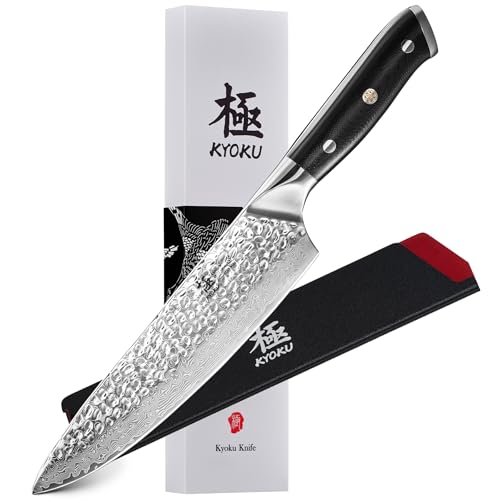
- 8″ chef knife: This all-purpose knife is part of Kyoku, manufactured with modern technology and…
- ultra-sharp blade: Sharpened to an 8 to 12 degree edge using the traditional 3-step Honbazuke…
- sturdy handle & case: The carefully constructed fiberglass handle with its signature mosaic pin…
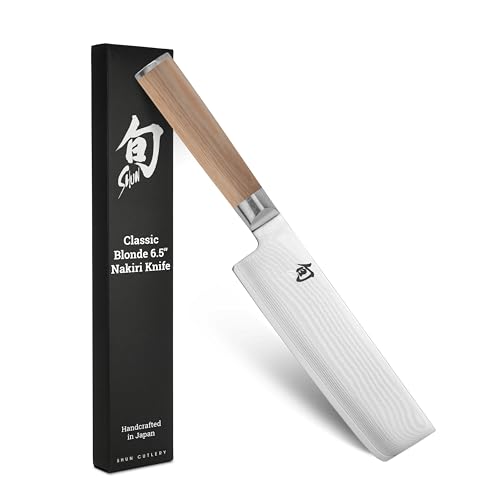
- SPECIALIZED VEGETABLE KNIFE: The Shun Classic Blonde 6.5-inch Nakiri Knife is expertly designed for…
- PIONEERING EXCELLENCE: Bring home a piece of the renowned Classic Series – the original authentic…
- SUPERIOR SHARPNESS: Crafted with VG-MAX steel and 68 layers of Damascus cladding, this knife…
Last update on 2026-03-21 / Affiliate links / Images from Amazon Product Advertising API