Shun Classic vs Shun Premier: Which One Is Worth More?
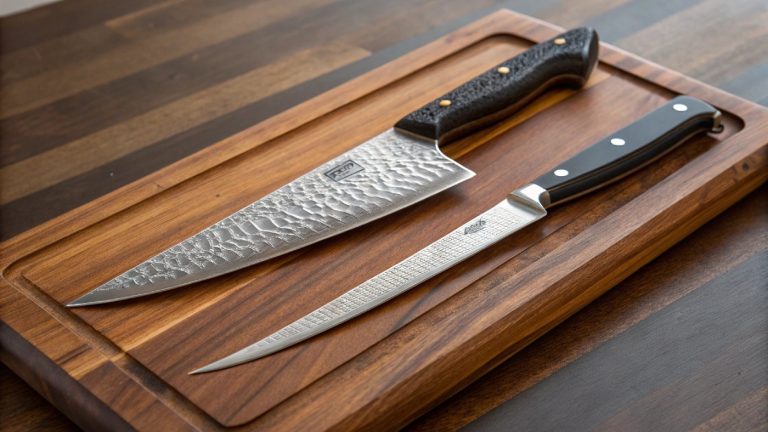
You’ll find Shun Classic blades thicker with a smooth, matte Damascus finish and ebony PakkaWood handles designed for precise control and durability, ideal for delicate slicing.
In contrast, Shun Premier knives feature a thinner, hammer-textured blade with a wavy Damascus pattern and ergonomic walnut handles that improve food release and reduce fatigue, perfect for rocking cuts and heavy prep.
Both use VG-MAX steel for sharpness and edge retention. Exploring further reveals how these factors affect performance and value.
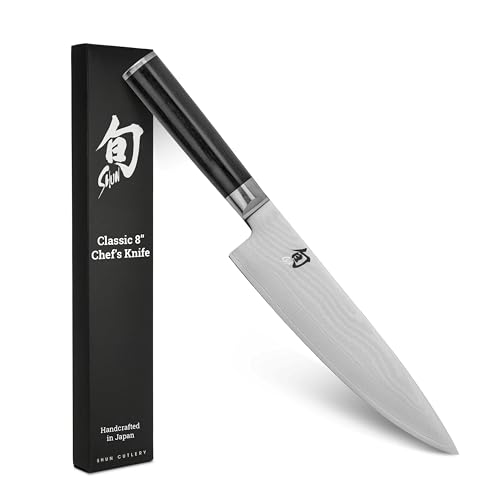
- JAPANESE CHEF KNIFE: The Shun Classic 8-inch Chef’s Knife is expertly designed for a variety of…
- PIONEERING EXCELLENCE: Bring home a piece of the renowned Classic Series – the original authentic…
- SUPERIOR SHARPNESS: Crafted with VG-MAX steel and 68 layers of Damascus cladding, this knife…
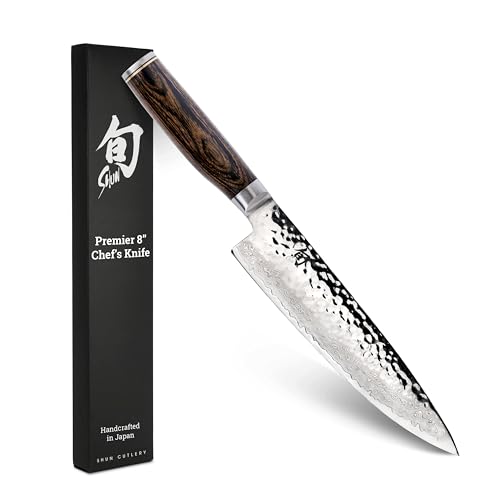
- JAPANESE CHEF’S KNIFE: The Shun 8-inch Premier Chef’s knife is the perfect all-purpose kitchen…
- WIDE, CURVED BLADE: This Japanese kitchen knife has a wide blade that keeps knuckles off the cutting…
- HIGH QUALITY CONSTRUCTION: Constructed from Shun’s proprietary VG-MAX cutting core and clad in 68…
Key Takeaways
- Both Shun Classic and Premier blades use VG-MAX steel with 68-layer Damascus cladding but differ in thickness and finish texture.
- Premier features a thinner spine and hammered tsuchime finish for better food release and cutting speed than Classic’s thicker, matte Damascus blade.
- Classic handles are D-shaped PakkaWood with a thumb groove for precision, while Premier offers rounded walnut handles designed for ergonomic comfort and stability.
- Premier knives cost about 25% more due to premium handle materials, hammered finish, and enhanced aesthetics compared to the more budget-friendly Classic line.
- Classic emphasizes traditional Japanese design with subtle patterns and matte finish, whereas Premier blends Japanese craftsmanship with Western ergonomic styling and glossy textures.
Side-by-Side Comparison: Shun Classic vs Shun Premier
| Feature | Shun Classic | Shun Premier |
|---|---|---|
| Blade Finish | Smooth Damascus with matte look | Hammered tsuchime with glossy texture |
| Blade Thickness | Slightly thicker spine | Thinner spine for faster cuts |
| Steel Type | VG-MAX core | VG-MAX core |
| Food Release | Moderate | Excellent due to hammered texture |
| Handle Design | D-shaped PakkaWood | Rounded walnut handle |
| Grip Style | Precision-focused | Comfort-focused |
| Aesthetic Style | Traditional Japanese | Modern and premium |
| Price Range | Lower | Higher (premium tier) |
| Best For | Fine slicing & control | Heavy prep & long sessions |
Blade Material and Construction Comparison
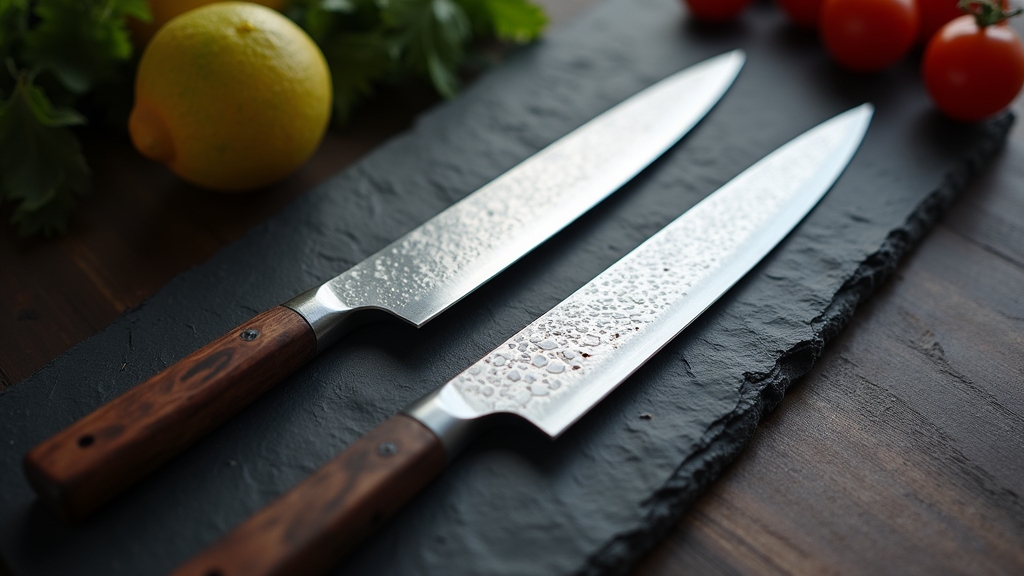
Both Shun Classic and Premier knives utilize VG-MAX stainless steel cores, an enhanced VG-10 variant with higher carbon content. This achieves 60-61 Rockwell Hardness, and the fine-grain steel structure optimizes sharpness and edge retention, outperforming softer German steels. The steel’s protective oxide layer formed by high chromium content enhances corrosion resistance during use.
Shun Classic and Premier knives feature VG-MAX cores with superior hardness and edge retention compared to German steels
Surrounding the core are 68 layers of Damascus cladding, with 34 thin layers per side, applied via san mai construction. This cladding acts as reinforcement and corrosion resistance, preventing rust and pitting. Manufacturing takes place in Seki City, Japan, where a meticulous 100-step process ensures exceptional quality.
Both blades feature full-tang construction, extending steel through the handle for balance and durability, capped with a steel butt end.
Blade thickness differs: Classic maintains a standard spine thickness, while Premier’s spine is 3mm thinner, reducing slicing resistance but minimally affecting cutting power.
Both share a 16-degree edge angle, balancing sharpness and durability.
Differences in Blade Finish and Design
Have you ever noticed the differences in the blade finishes of the Shun Classic and Premier knives? The Shun Classic showcases a subtle Damascus pattern with those nice horizontal waves, giving it a classic look.
On the other hand, the Premier takes things up a notch with a swirly Damascus design, and it’s got that unique hammered tsuchime texture on the upper half of the blade. This hammered finish is known as a Sime finish and features dimples on the spine half of the blade, which aids in food release by creating tiny air pockets.
Now, that tsuchime finish isn’t just for looks! It actually creates tiny air pockets, which help reduce drag and keep food from sticking to the blade. So, you get a functional benefit along with its striking aesthetic. Pretty neat, right? Both versions benefit from high-quality steel choices that enhance edge sharpness retention and durability.
Understanding these differences really helps you see how blade design choices impact both the knife’s performance and its visual appeal.
Damascus Pattern Contrast
Although both the Shun Classic and Premier knives share the same VG-MAX stainless steel core and 69-layer Damascus cladding, their blade finishes reveal distinct patterns due to different finishing techniques.
The Classic employs bead blasting to expose a consistent shiny, pebbly Damascus texture. In contrast, the Premier uses a bead-blasted, wavy pattern with a dimpled upper half that visually separates the blade surfaces. This difference also reflects Shun’s commitment to blending traditional Japanese techniques with modern design, enhancing both aesthetics and performance. Such attention to detail is akin to how interchangeable blades in kitchen tools allow for varied textures and functions.
This contrast arises from grinding and finishing methods that highlight the alternating darker carbon steel and brighter nickel silver layers uniquely on each blade.
| Feature | Shun Classic | Shun Premier |
|---|---|---|
| Damascus Texture | Shiny, pebbly | Wavy with dimpled upper half |
| Pattern Consistency | Uniform over blade | Distinct visual separation |
| Blade Thickness | Standard | 3mm thinner at spine |
Hammered Tsuchime Texture
Beyond the Damascus pattern differences, the Shun Premier series distinguishes itself with a hammered tsuchime finish applied to the upper half of its blade. This feature is absent from the smooth surface of the Classic series.
The hammered texture results from actual hammer marks made during forging, creating consistent dimples across all Premier blades. In contrast, the Classic blades undergo grinding and polishing without hammering, yielding a smooth, matte surface. This difference in blade finish reflects traditional versus modern knife-making techniques seen in many Japanese kitchen knives with long, thin blades.
The tsuchime dimples produce tiny air pockets that reduce drag, enhancing food release, particularly with sticky ingredients. This finish also contributes to the Premier’s rust resistance due to its stainless steel composition.
Visually, the Premier’s glossy, reflective hammered finish contrasts with the Classic’s uniform, traditional look.
You’ll also notice the Premier’s textured surface to the touch, while the Classic remains smooth.
This hammered finish adds a distinct manufacturing step exclusive to the Premier line.
Functional Aesthetic Benefits
When choosing between the Shun Classic and Premier series, understanding their blade finish and design differences is essential for optimizing cutting performance and user experience.
The Premier’s tsuchime hammered finish creates microscopic air pockets that reduce surface tension, enhancing food release and minimizing drag. Its thinner spine and pronounced curve support efficient European-style rocking cuts, while dimples on the blade spine further reduce resistance. Additionally, both knives are handmade in Japan, underscoring their craftsmanship quality. Regular maintenance like knife sharpening ensures these design benefits remain effective over time.
In contrast, the Classic’s smooth, polished blade offers a traditional Japanese profile with a straighter curve, prioritizing versatile precision.
Both knives use VG-MAX steel with Damascus layers for corrosion resistance.
However, the Premier’s textured finish hides scratches better and provides a more tactile, evolving aesthetic. These design nuances give the Premier subtle functional advantages without sacrificing the Classic’s sharpness or control.
Handle Design and Ergonomics
While both Shun Classic and Premier knives utilize PakkaWood handles for durability and moisture resistance, their designs cater to distinct ergonomic preferences.
Shun Classic and Premier knives both feature durable PakkaWood handles tailored to different ergonomic needs.
The Classic’s D-shaped handle offers a narrower, asymmetrical profile with subtle bulges and a thumb groove, optimizing control and preventing twisting during precision tasks. This form favors a lighter, agile grip, especially for right-handed users. Additionally, the Classic handle is crafted to be resistant to slippage and rust, enhancing its longevity and safety during use. Similar to other premium cleavers like the HOSHANHO Cleaver Knife, the ergonomic handle design significantly reduces hand strain during extended use, making it ideal for precision chopping tasks.
In contrast, Premier handles present a more rounded, symmetrical shape with a fuller “Western-style” grip, featuring a pronounced girth that accommodates various hand sizes and grip styles. This contour enhances comfort during prolonged use and reduces fatigue.
The Premier handle also incorporates a natural Walnut wood with a steel rim, combining aesthetic appeal with structural strength. This design approach aligns with the ergonomic principles found in knives like the PAUDIN Cleaver Knife, which uses a pakkawood handle to ensure a non-slip grip and reduce fatigue during heavy chopping.
Both handles feature semi-gloss finishes and textured surfaces to minimize slippage, but Classic emphasizes precision control, whereas Premier prioritizes robust, fatigue-resistant ergonomics. These features are complemented by decorative inlays and stainless steel end caps.
Performance and Practical Use Cases
The ergonomic differences between the Shun Classic and Premier handles influence how each knife performs during extended use and specific cutting tasks. The lighter, D-shaped Classic handle offers superior control for delicate slicing and precision work.
In contrast, the Premier’s rounder, slightly heavier handle provides stability for heavier chopping and rocking cuts. Both blades use VG-MAX steel with similar 16° edges; however, Premier’s thinner, hammered *tsuchime* finish reduces drag and food sticking.
This enhancement boosts cutting speed and efficiency during prep. Classic’s smooth Damascus finish delivers consistent slicing but with less food release benefit.
The Premier’s blade geometry and finish suit professional, repetitive use. Meanwhile, the Classic excels in maneuverability and finer tasks. Edge retention and durability are comparable, though Premier demands gentler handling to maintain its sharper, thinner profile.
Additionally, the presence or absence of a knife bolster can affect the balance and safety of these knives during use.
Pricing and Value Analysis
When comparing costs, you’ll notice that Shun Premier knives are generally about 25% pricier than the Classic models. This price difference mainly stems from their unique hand-hammered blade finish and improved handle design. The Premier series also uses a walnut Pakkawood handle, which offers enhanced ergonomic comfort compared to the Classic’s ebony handle. So, it’s really important to consider these aesthetic and ergonomic enhancements.
On the other hand, the Classic series features a simpler finish and offers a broader selection, which often means you have more pricing flexibility. This flexibility can be crucial when balancing quality and budget, especially since premium materials like teak wood tend to increase costs in kitchen products.
It’s all about weighing these differences to see which series provides the best value for your specific needs and budget.
Cost Comparison Overview
You’ll find Shun Premier knives typically priced between $180 and $300, reflecting their premium finishes and design features.
In contrast, Shun Classic knives generally range from $150 to $250, making them about 20-25% less costly.
Both lines use VG-MAX steel, so material costs are similar; however, Premier’s hammered Tsuchime blade finish and thinner blade profile add manufacturing complexity and justify the price premium.
Classic knives feature a polished Damascus finish and thicker blades, reducing production expenses.
Handle designs also impact cost. Premier’s oval pakkawood handle with a steel endcap is pricier than Classic’s simpler handle.
Availability affects pricing too, with Classic offering more diverse, budget-friendly options, while Premier focuses on exclusivity and aesthetics, usually commanding higher prices across retailers.
When maintaining these knives, using a consistent sharpening angle is crucial to preserving their edge and performance over time.
Value Proposition Differences
Although both Shun Classic and Premier knives share the same high-grade VG-MAX steel core, their distinct blade finishes and ergonomic designs create especially different value propositions. Premier’s tsuchime hammered finish reduces food adhesion, enhancing cutting efficiency. Its rounded tip supports versatile European rocking cuts.
Additionally, the Premier line features a 4-inch blade length, offering more control for heavier tasks. The ergonomic refinement in the Premier’s handle design reflects a trend toward contoured grips for improved comfort during extended use.
Classic’s matte Damascus offers understated elegance, with a straighter, D-shaped handle favoring precision control. Premier’s contoured, oval Pakkawood handle improves grip comfort, reducing user fatigue. Both lines have 69-layer Damascus cladding ensuring durability and corrosion resistance. Performance differences hinge on design nuances rather than steel quality.
Classic provides broader style options at a lower price, appealing to customization seekers. Premier commands a premium for its functional enhancements and distinctive aesthetics, justifying higher cost through improved utility and ergonomic refinement. Your choice depends on prioritizing style variety or elevated cutting experience.
Aesthetic Appeal and Brand Positioning
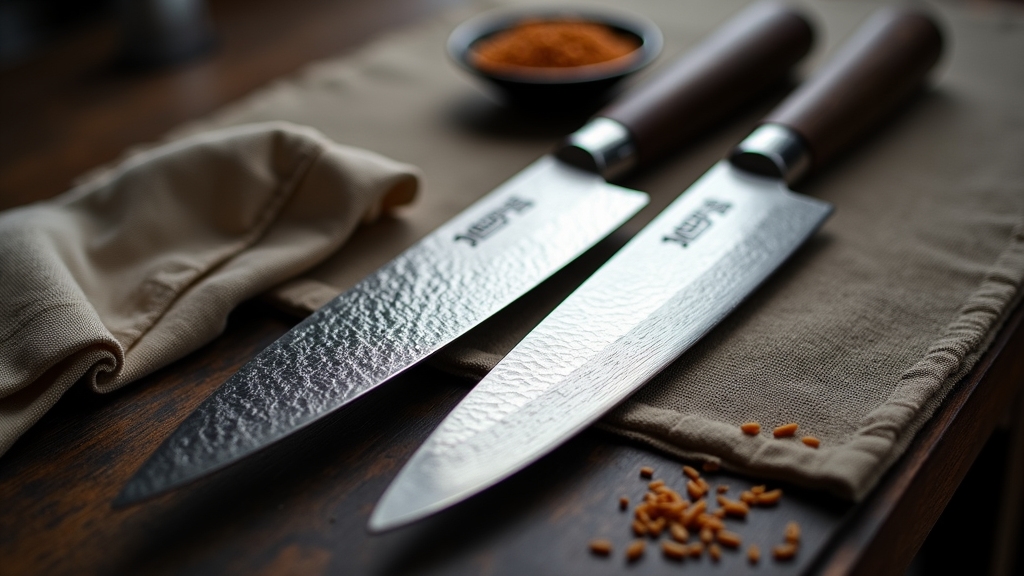
While both Shun Classic and Shun Premier knives showcase expert craftsmanship, their aesthetic appeal and brand positioning clearly distinguish them.
You’ll notice Classic’s subtle, horizontal Damascus pattern with a matte glow, contrasted by Premier’s swirly Damascus near the edge combined with a hammered tsuchime finish that adds a shiny, textured surface.
Handles differ too: Classic’s D-shaped ebony or blond PakkaWood offers control, while Premier’s contoured brown PakkaWood with a brass-black inlay suits Western grips.
Consider these points:
- Classic targets entry-level users seeking traditional Japanese design at a lower price.
- Premier appeals to those wanting a refined, sophisticated look blending Japanese and Western ergonomics.
- Premier’s premium finishes and ergonomic enhancements justify its higher market positioning and cost.
Frequently Asked Questions
Are Shun Classic and Premier Knives Dishwasher Safe?
No, you shouldn’t put Shun Classic or Premier knives in the dishwasher.
Dishwasher detergents contain corrosive chemicals that damage the blade’s protective finish and promote rust.
The aggressive washing cycle can cause knife edges to knock against other items, dulling or chipping them.
Instead, hand wash your knives gently with warm water and mild soap, then dry them immediately to preserve their sharpness and guarantee long-term performance.
How Do Classic and Premier Knives Compare in Weight?
You’ll notice the Premier weighs about 7.5 ounces, slightly lighter than the Classic, which edges just above that.
This minimal difference, less than an ounce, means you won’t feel a significant change during typical use.
Premier’s 1.9mm spine thickness and balanced weight distribution reduce fatigue, while Classic’s extra heft offers stability.
Both maintain full-tang construction, ensuring precise handling, but your preference for weight depends on whether you want lighter agility or added control.
What Is the Recommended Sharpening Angle for Both Series?
You should sharpen both series at a 16-degree angle per side, maintaining symmetry for essential edge performance.
Use a whetstone set around 15 degrees during sharpening to guarantee precise bevel formation.
Burr removal is vital and done by stroking the blade at the same angle.
For maintenance, rely on a honing steel with a built-in 16-degree guide.
Note, some Classic heavy chefs’ knives use a wider 22-degree angle, requiring more cutting force.
Are There Differences in Handle Maintenance Between Classic and Premier?
Oh sure, just add handle maintenance to your list of life’s impossible challenges!
In reality, both handles need nearly identical care: handwash only with mild soap, avoid soaking, and dry promptly.
The Premier’s contoured shape might demand slightly more attention to clean every groove, while the Classic’s D-shape is simpler but can trap debris along edges.
Neither requires special treatment thanks to Pakkawood’s resin protection, so maintenance differences are minimal and manageable.
Final Verdict: Shun Classic vs Shun Premier for Everyday Use
So, if you’re torn between Shun Classic and Premier, it’s ironic how both blades, crafted with impeccable VG-MAX steel and expert construction, promise precision yet differ in finish and feel.
You’ll find Classic’s traditional beauty charming, while Premier’s modern design offers enhanced ergonomics.
Ultimately, your choice boils down to whether you value timeless elegance or contemporary comfort because when it comes to sharpness, neither will let you down.
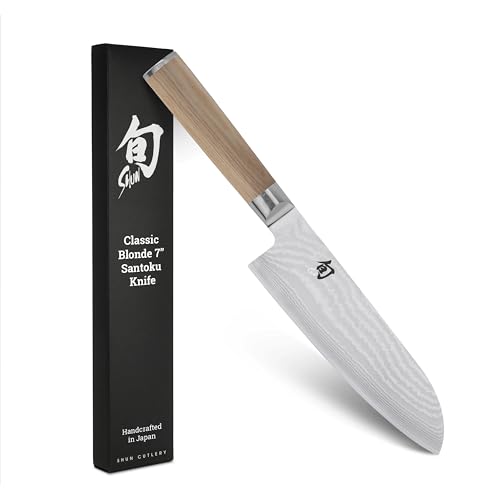
- ALL PURPOSE KITCHEN KNIFE: The Shun Classic Blonde 7-inch Santoku Knife is expertly designed for…
- PIONEERING EXCELLENCE: Bring home a piece of the renowned Classic Series – the original authentic…
- SUPERIOR SHARPNESS: Crafted with VG-MAX steel and 68 layers of Damascus cladding, this knife…

- VEGETABLE KNIFE: A traditional Japanese-style vegetable knife, the Shun Premier 5.5-inch Nakiri…
- STRAIGHT BLADE: The straight blade, edge, and spine make this Japanese knife perfect for simple push…
- HIGH-QUALITY CONSTRUCTION: Constructed from Shun’s proprietary VG-MAX cutting core and clad in 68…
Last update on 2026-03-21 / Affiliate links / Images from Amazon Product Advertising API