
Chef Knife vs Santoku Knife: A Cook’s Comparison
If you want versatile power and smooth rocking cuts, a chef knife’s longer, curved blade is your best bet, especially for heavy-duty chopping and slicing larger items.
But if you prefer nimble precision with push-cutting, less wrist fatigue, and better knuckle clearance, a santoku’s shorter, flatter blade excels at fine, uniform cuts and reduces food sticking.
Both require different grips and care, so understanding their unique designs will help you match your kitchen style perfectly.
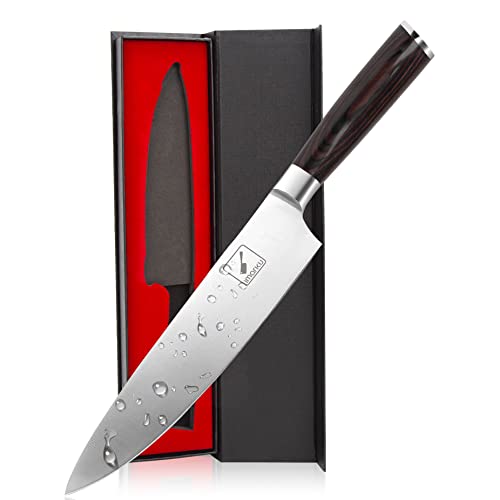
- High-Carbon Stainless Steel Blade: It is manufactured from high-quality stainless steel that…
- Multi-functional Knife: The gyutou knife is classified and designed to be a multipurpose knife for…
- Ergonomic Pakka Handle: To make it more professional and minimize any fatigue, finger numbness or…
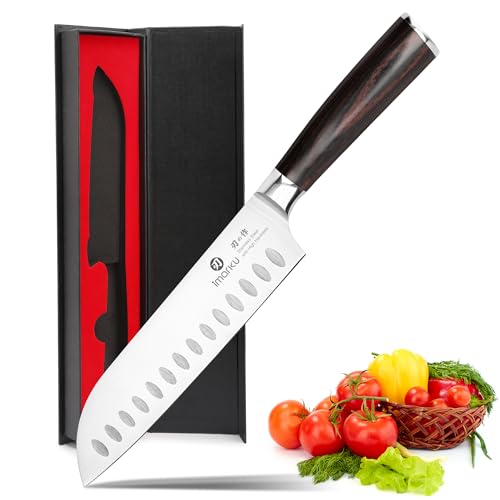
- Professional Santoku Knife: This imarku super sharp santoku knife is made of high carbon stainless…
- Ultra-Sharp Edge: Sharpness is key. The professional knife blade polishing makes this Japanese knife…
- Hollow Edge Design: The 7-inch santoku chef knife scalloped hollow edge is add gap between the knife…
Key Takeaways
- Chef knives have longer, curved blades ideal for rocking motions and versatile chopping of large ingredients, while Santoku knives feature shorter, flatter blades suited for precise vertical cuts.
- Santoku knives offer a taller blade profile with more knuckle clearance and a blunt sheepsfoot tip, enhancing safety and control for less experienced users.
- Chef knives typically have thicker, heavier blades with a 20–25° edge angle for durability, whereas Santoku blades are thinner, harder, and sharpened to about 15° per side for precision.
- Santoku knives often include Granton edges to reduce food sticking, making them efficient for slicing vegetables, while chef knives excel in heavy-duty tasks like crushing and roll-cutting.
- Santoku knives are lighter and more compact, reducing wrist strain and fitting confined spaces, whereas chef knives provide extended reach and robust balance for larger tasks.
Blade Design and Shape Comparison
While both chef and Santoku knives serve essential roles in the kitchen, their blade designs differ markedly to suit distinct cutting techniques.
Chef knives range from 7 to 12 inches with a broader blade curving upward to a pointed tip, ideal for rocking cuts. This design allows for efficient rock chopping, making it perfect for slicing meats and dicing vegetables. In contrast, Santoku blades are shorter, around 6 to 7 inches, but taller, offering more knuckle clearance with a straighter edge and a blunt sheepsfoot tip for safer, precise push cuts.
The Santoku’s thinner, harder blade focuses on clean, delicate slicing, whereas the chef knife’s thicker, heavier blade provides durability for heavier tasks.
Additionally, chef knives usually have a sharper upward curve, while Santoku knives feature a flatter edge and wider belly, enhancing versatile chopping and dicing.
The Santoku’s blade often incorporates granton grooves to prevent food from sticking while cutting, improving efficiency and precision.
Differences in Cutting Techniques
When you’re using a chef knife, you really get to enjoy that smooth rocking motion, right? It lets you take full advantage of the curved blade for all kinds of slicing and chopping. It’s pretty versatile! Chef’s knives typically have a broader blade that curves upward to form a tip, which facilitates this rocking motion.
But then you switch over to a santoku knife, and things change a bit. This knife calls for a more precise, vertical chopping technique because of its flat edge. That really gives you enhanced control and speed when you’re working in the kitchen. Its design supports chopping, slicing, and gentle rocking motions, allowing for effective dicing and mincing.
Oh, and have you noticed how the santoku’s design helps with food release? Features like Granton edges really do make a difference by reducing sticking, especially when compared to the broader surface of a chef knife. It’s interesting how these little design elements can impact your cooking experience!
Rocking vs Chopping
Because chef and Santoku knives have distinct blade shapes, they demand different cutting techniques that affect your efficiency and control.
With a chef knife’s curved blade, you use a rocking motion, pivoting the blade tip to heel for smooth, continuous chopping. A Santoku, with its flatter edge, calls for straight up-and-down chopping, lifting and pressing vertically for crisp cuts. The rocking motion of a chef knife is enhanced by its pronounced curve, allowing seamless roll-cutting.
Consider these differences:
Chef knife’s rocking suits larger items; Santoku’s vertical chops excel at fine dicing.
Rocking requires more wrist movement; chopping minimizes fatigue.
Curved blade distributes cutting force during rocking; flat blade focuses force on downward chops.
Santoku’s shorter blade fits confined spaces; chef knife’s longer blade covers wide arcs.
Rocking scoops food as you cut; chopping allows quick tap-and-lift food removal.
Choose your technique based on your task’s size and precision needs. The choice often depends on your preferred cutting style and the specific ingredients you work with daily.
Precision and Control
Mastering the distinct cutting techniques of chef and Santoku knives naturally leads to examining how their blade designs influence your precision and control.
The Santoku’s lighter, thinner blade with a flat edge and rounded tip excels at vertical chopping and push-cutting. This allows you finer, more accurate slices with less effort. Its flatter belly and taller blade profile also help keep knuckles clear of the cutting board for safer, more comfortable use. The Santoku’s design reflects a fusion of traditional Japanese methods and Western influences, making it a versatile choice for many kitchens with its double-bevel design.
In contrast, the thicker, heavier chef knife with its curved edge suits rocking motions. This gives you broad, versatile cuts but demands more control for delicate tasks. Its robustness often comes from using harder steels, which supports powerful chopping but can limit precision.
Santoku’s sharper edge angle and shorter blade length enhance wafer-thin slicing and fingertip control, especially for small hands.
Meanwhile, the chef knife’s robust build supports powerful chopping but can limit precision.
Food Release Methods
Food tends to stick less on Santoku knives thanks to their distinct vertical chopping motion and flatter blade design. This design lets you make clean, efficient cuts without lifting the blade much.
Unlike the rocking motion of chef knives, Santoku’s straight edge and often Granton edges create air pockets that reduce food adhesion. When using a chef knife, you rely on the curved blade to scoop and release food during the rocking cut.
Santoku’s up-and-down chopping minimizes tearing and sticking. Chef knife’s rocking motion aids continuous cutting and food release.
Granton edges on Santoku reduce suction and friction. Santoku’s sharper, thinner edge slices cleanly with less compression.
Chef knives’ thicker, curved blade helps dislodge tougher food pieces. This reflects distinct cutting and food release dynamics you’ll notice with each knife style.
For maintaining the sharpness required for these different cutting techniques, using the right knife sharpening stone can significantly enhance your cutting experience and blade longevity.
Blade Material and Sharpness Variations
When selecting between a chef knife and a Santoku knife, you’ll notice that the blade materials markedly influence sharpness and durability.
Chef knives typically use softer stainless steel with lower carbon, offering toughness and resistance to chipping but less sharpness. This makes them more suitable for users who prefer low maintenance knives in busy kitchen environments. In contrast, Santoku knives employ harder, high-carbon Japanese steels like AUS-10V, enabling thinner, sharper edges but increased brittleness.
You’ll find Santoku blades sharpened to 10–15 degrees per side, achieving finer cuts, while chef knives average 20–30 degrees for balanced edge retention.
Both may feature carbon steel or layered Damascus for enhanced properties.
Santoku’s thinner, straighter blades excel at delicate slicing but require careful maintenance. Chef knives tolerate rougher use due to their tougher, more resilient steel composition.
Because of their higher brittleness, Santoku knives require more careful sharpening and rust prevention to maintain performance.
Size, Weight, and Handling Factors
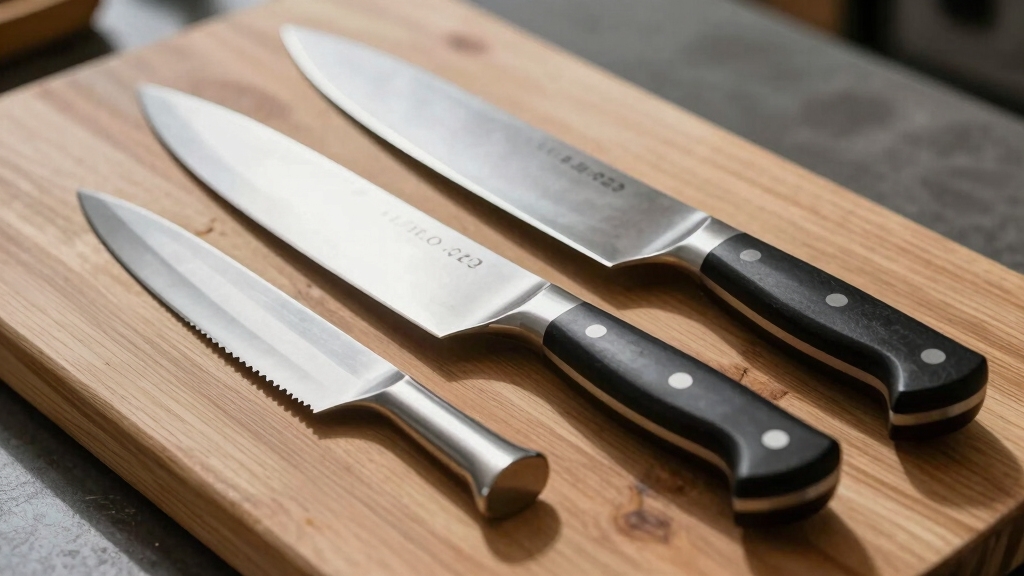
You’ll notice that the santoku has a shorter blade, typically ranging from 5 to 7 inches. This makes it lighter and much easier to maneuver in tight spaces. Santoku knives are also sharpened at a 15-degree angle on each side, which contributes to their precision. Its flat edge is especially suited for clean vegetable chops, enhancing control during detailed work.
In contrast, the chef knife has a longer blade, usually between 8 to 10 inches. Now, the extra weight and balance of the chef knife really come in handy for those powerful, rocking cuts. This curved edge design supports rock-chopping techniques, making it ideal for slicing herbs and larger cuts efficiently.
On the other hand, the santoku is all about precision. It’s designed for push-cutting motions, which can reduce fatigue during use. Its compact size and versatility make it a great choice for smaller portions and intricate tasks in the kitchen.
Blade Length Comparison
Although both chef knives and santoku knives serve essential roles in the kitchen, their blade lengths differ markedly. This affects size, weight, and handling. Chef knives usually range from 16 to 25 cm (6 to 10 inches), favoring rocking cuts with their curved blades and pointed tips. Their curved edge is similar to the Gyuto blade, which enhances versatility in various cutting techniques.
Santoku knives have shorter blades, typically 15 to 20 cm (6 to 7.5 inches), with a flatter edge and rounded tip that optimize push cuts and precision. The santoku blade’s thin geometry also reduces resistance during cutting, enhancing control and reducing hand fatigue.
Longer chef knives support versatile cutting styles, including slicing and rocking. Santoku’s shorter blade enhances control and agility, especially for small to medium hands.
The flatter santoku blade limits rocking but improves chopping efficiency. Chef knives handle larger volumes but can feel cumbersome in tight spaces.
Santoku blades offer better knuckle clearance and scooping ability due to their wider profile.
Weight and Balance
Weighing in between 120g and 200g, Santoku knives offer a lighter, more nimble experience that reduces hand fatigue during extended use. Chef knives generally tip the scales heavier, providing the extra power needed for tougher ingredients.
Santoku knives are often preferred by cooks who focus on vegetable-heavy prep and smaller cutting boards due to their size and balance. Their design allows for efficient push-cutting techniques that complement precision tasks.
Santokus balance weight evenly between blade and handle, enhancing precision. Chef knives favor a sturdier build with balance geared toward chopping strength.
| Feature | Santoku Knife | Chef Knife |
|---|---|---|
| Weight Range | 120g – 200g | Heavier, often 200g+ |
| Balance | Even blade-handle weight | Heavier handle, bolster adds weight |
| Blade Length | 5–7 inches | 8–12 inches |
| Ideal Use | Precision, light chopping | Power cutting, versatile use |
Handling and Control
When selecting between a chef knife and a santoku, understanding how size, weight, and design affect handling and control is essential.
The chef knife’s longer, curved blade excels at rocking motions, offering reach and momentum for heavy-duty tasks. This design contrasts with knives like the Yanagiba, which feature long, thin blades optimized for precision but require different handling techniques.
In contrast, the santoku’s shorter, straighter blade suits push-cut chopping with nimble precision and less wrist fatigue. Its wide sheepsfoot blade design is especially suited for precision tasks, enhancing control.
Handle design also plays a role: chef knives feature bolsters for secure grips, while santokus have seamless handles ideal for smaller hands. Similar to the Sujihiki, handle comfort and grip significantly influence cutting control and performance.
Consider these factors:
- Santoku’s shorter blade enhances maneuverability in tight spaces.
- Chef knives provide leverage for broad, sweeping cuts.
- Lighter santokus allow faster, more agile movements.
- Heavier chef knives demand firmer grips but offer power.
- Handle shape influences grip style and cutting control.
Precision and Versatility for Kitchen Tasks
Because precision and versatility are key in your kitchen tasks, choosing between a chef knife and a santoku knife depends on how you approach cutting.
Chef knives excel with a curved blade allowing rocking motions for diverse tasks and heavier cuts. Santokus offer a straighter edge with sharper angles, ideal for precise, thin slicing and uniform dicing. The chef’s knife is also well-suited for finely chopping herbs and peeling garlic thanks to its pointed tip and curved blade that facilitates a rocking motion (all-rounder suitability).
Your choice hinges on whether you prioritize power and versatility or finesse and consistent thin cuts.
| Feature | Chef Knife | Santoku Knife |
|---|---|---|
| Blade Shape | Curved belly for rocking cuts | Flat edge for push-cut slicing |
| Edge Angle | 20–25°, durable | 12–15°, ultra-sharp |
| Length | 8-10 inches, longer reach | 5-7 inches, nimble control |
| Weight | Heavier, suited for tougher tasks | Lighter, reduces wrist fatigue |
| Cutting Style | Versatile, accommodates large tasks | Precise slicing, dicing, chopping |
Safety Considerations and Skill Requirements
Choosing between a chef knife and a santoku goes beyond precision and versatility. It also involves understanding how their designs affect safety and skill demands.
The santoku’s sheepsfoot tip and straighter edge promote safer, more controlled chopping, ideal if you’re less experienced. In contrast, the chef knife’s pointed tip and rocking motion require sharper awareness to avoid slips or punctures.
Santoku’s blunt tip reduces stabbing risks. The chef knife’s pointed tip demands more control.
Santoku’s straight edge favors vertical cuts. The chef knife’s curve suits rocking but risks slips. The santoku’s straight, short blade developed from traditional Japanese knives enhances precision cutting.
Lighter, balanced santoku eases wrist strain. The heavier chef knife needs a steady grip.
Santoku lacks bolster, so grip technique is vital. The chef knife often includes a finger guard.
Santoku suits beginners aiming for low-risk handling. The chef knife fits skilled users comfortable with dynamic motions.
Choosing the Right Knife for Your Cooking Style
If your cooking style emphasizes versatility and power, a chef knife’s longer, curved blade offers the leverage and rocking motion ideal for breaking down large ingredients and performing varied cuts. Its heavier weight provides momentum for dense vegetables or meat, while the robust heel tackles tough tasks like crushing garlic or cracking shells. The blade is typically wide (~4–5 cm high) and tapers in a slightly rounded line to a point, supporting various cutting techniques.
Conversely, if you value precision and control, especially for fine slicing or dicing vegetables, herbs, and seafood, a santoku knife’s shorter, lighter blade excels. Its flat edge supports straight-down chopping without rocking, and the granton edge reduces food sticking for smoother cuts. Many models feature Granton dimples to create air between blade and food, reducing sticking.
Additionally, santoku knives’ thinner, harder steel sharpens to a finer angle, enhancing slicing finesse. Choose a chef knife for heavy-duty versatility; opt for a santoku when your style demands delicate, uniform cuts with nimble handling.
Frequently Asked Questions
Can I Use a Santoku Knife for Boning Meat?
You can use a Santoku knife for boning meat, but it’s not ideal.
Its blunt tip and wider blade reduce precision when slipping under bones or trimming joints.
You’ll struggle with detailed cuts and maneuvering around curved bones.
It works better for slicing boneless meat or general prep.
If you want clean, efficient boning, a dedicated boning knife or chef’s knife with a pointed, flexible blade will serve you much better.
How Do I Properly Sharpen a Santoku Knife?
To properly sharpen your santoku knife, maintain a consistent 10° to 15° angle using an angle guide.
Start with a medium grit whetstone (400–1000 grit) to reshape the edge, then progress to finer grits (3000–8000) for polishing.
Use light, even pressure, sharpening both sides equally to prevent warping.
Feel for a burr as a sign of progress, then remove it gently with a leather strop for a razor-sharp, balanced edge.
Are Santoku Knives Dishwasher Safe?
Don’t toss your Santoku knife in the dishwasher like a carefree sailor casting off ropes. You risk dulling its sharp edge and staining its blade.
Most Santoku knives aren’t dishwasher safe, as harsh detergents and heat wear down both blade and handle.
Some brands, like Zyliss or Ginsu, do offer dishwasher-safe models. Even then, hand washing with warm, soapy water preserves your knife’s precision and beauty far better over time.
What Is the Best Way to Store a Chef Knife?
The best way to store your chef knife is on a securely mounted magnetic strip or in a well-fitted knife block.
Magnetic strips keep blades accessible and prevent edge damage, but make sure they’re away from heat sources to avoid warping.
Knife blocks offer stability and safety, protecting edges and reducing kitchen hazards.
Avoid tossing knives loosely in drawers; instead, use protective sheaths or in-drawer trays to maintain sharpness and prevent accidents.
Can a Chef Knife Replace a Santoku Knife Completely?
You might find that a chef knife can gracefully cover most tasks a santoku does, but it won’t fully replace it.
The chef knife’s curved blade excels at rocking cuts and heavy-duty chopping, while the santoku shines with precise, straight slicing and delicate work thanks to its thinner, sharper edge.
Sharpen Your Choice: The Best Knife for Your Kitchen Style
Choosing between a chef knife and a santoku knife is like selecting the perfect brush for your culinary canvas.
The chef knife’s curved blade invites fluid, rocking motions, symbolizing tradition and versatility.
Meanwhile, the santoku’s straight edge offers precise, controlled cuts, embodying modern efficiency.
Understanding their differences sharpens not only your skills but your connection to the craft.
This ensures every slice reflects your unique cooking style with confidence and safety.
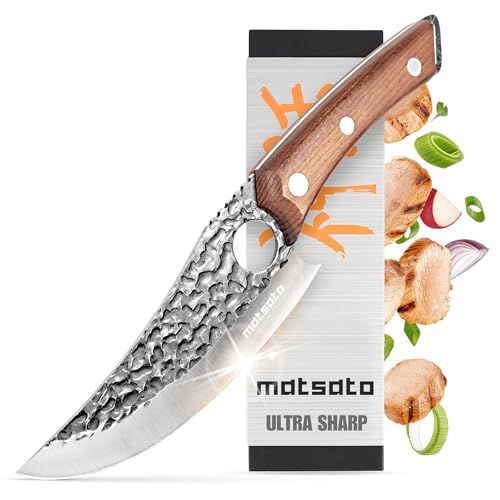
- Chef knife for every kitchen | Whether you are a home cook or a professional chef, every kitchen…
- Well-balanced craftsmanship | solid oak handle crafted from premium quality materials. The Matsato…
- Chef knives | The Matsato Japanese Steel kitchen knife was hand-crafted using traditional styling…
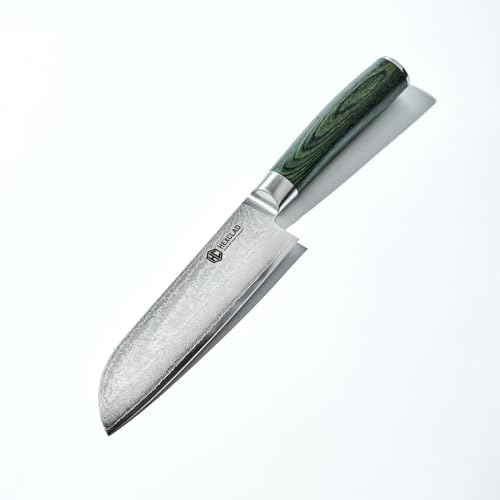
- 67 layers of Damascus steel for a harder blade that stays sharper longer with an ergonomic Pakkawood…
- Our Damascus steel santoku knife–a blade with Japanese origins–is a true triple-threat as it’s a…
- Our knives are expertly crafted tools that maintain their sharpness for extended periods with proper…
Last update on 2026-03-21 / Affiliate links / Images from Amazon Product Advertising API