Carbon Steel Knife Care: Rust-Proof Tips
You should wash your carbon steel knife by hand with mild soap and warm water immediately after use, avoiding soaking.
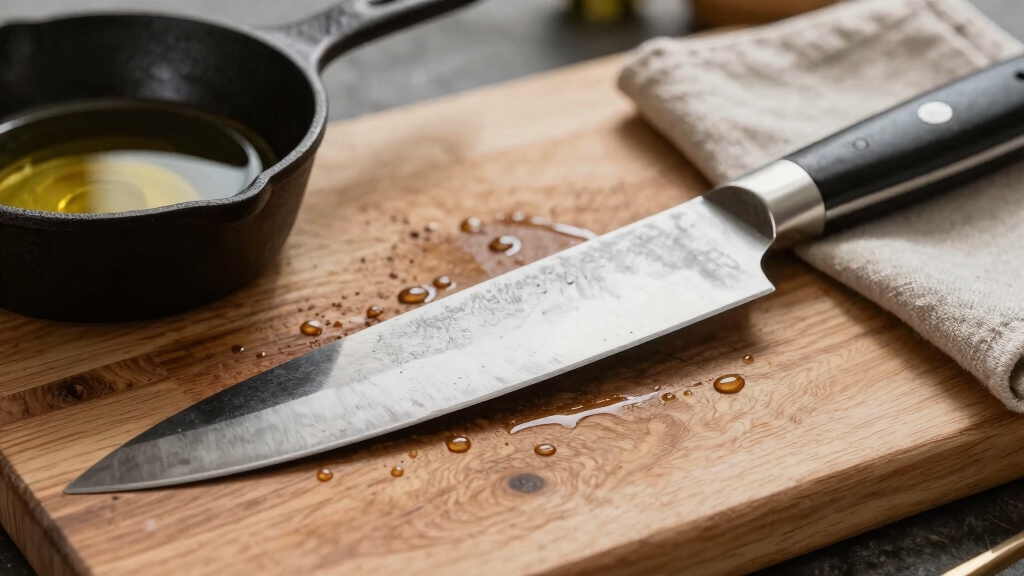
Dry it thoroughly with a soft towel to prevent rust, then apply a thin layer of food-safe oil like mineral or camellia oil for protection.
Store it in a dry, ventilated spot, avoiding moisture-trapping cases.
Regularly sharpen the blade at a 15–20° angle and remove any rust gently.
Keep these habits up, and you’ll maintain your knife’s sharpness and durability. There’s more to explore for ideal care.
Key Takeaways
- Hand-wash carbon steel knives immediately with mild soap and warm water; avoid soaking to prevent rust.
- Thoroughly dry knives with an absorbent towel right after washing to stop oxidation.
- Apply a thin layer of food-grade mineral or camellia oil after drying to protect against moisture and rust.
- Store knives in dry, ventilated areas on magnetic wooden strips or knife blocks, avoiding damp sheaths.
- Remove surface rust gently using vinegar-soaked cloths, baking soda paste, or rust erasers without harsh abrasives.
Proper Cleaning Techniques for Carbon Steel Knives

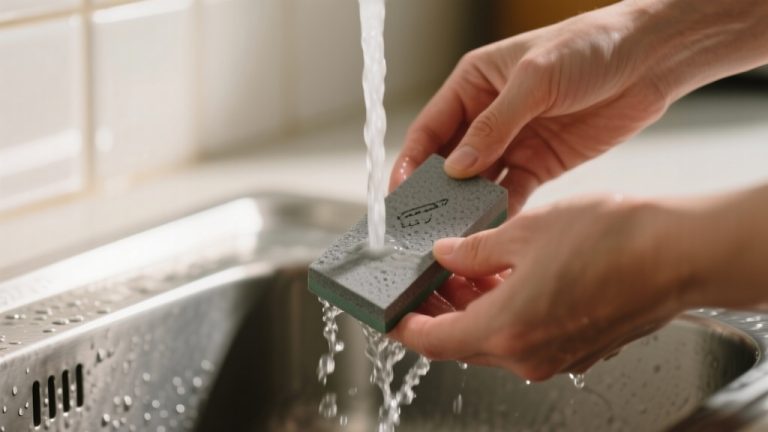
Because carbon steel knives are prone to corrosion, you should hand-wash them immediately after use with warm water and mild dish soap to remove food residues and acids.
Avoid soaking the blade, as prolonged water exposure increases rust risk.
Use a soft sponge or cloth instead of abrasive pads to protect the patina and prevent scratching.
Rinse thoroughly with warm water to eliminate all soap and food particles that can trap moisture.
After rinsing, dry the blade completely with an absorbent towel to stop oxidation before it starts.
If you encounter light rust, gently scrub with a baking soda paste and a non-grooving pad.
Always avoid harsh abrasives or chemical rust removers that could damage the steel’s temper or finish.
Applying a thin layer of food-grade mineral oil after drying can help shield the blade from moisture and prevent rust.
Effective Drying and Storage Practices
After cleaning your carbon steel knife, drying it properly is just as important to prevent rust and maintain its performance. Wipe the blade immediately with a damp cloth, then dry it thoroughly using an absorbent towel while the blade is still warm.
Properly dry your carbon steel knife immediately after cleaning to prevent rust and maintain performance.
Avoid moisture traps by steering clear of sheaths or storage cases that retain dampness. Store your knife in a dry, well-ventilated spot to preserve its patina and prevent corrosion. Applying a thin layer of mineral oil to the blade can further help prevent rust. Regularly inspecting your knife for any signs of rust formation can catch problems early.
Use a clean microfiber or cotton towel for complete drying. Rinse and dry the blade immediately after contact with acidic foods. Store knives on magnetic wooden strips or in knife blocks with edge-up positioning.
Avoid abrasive towels or dishwashers to protect the blade. Wipe dry between uses to prevent moisture buildup.
Essential Oiling Tips to Prevent Rust

While cleaning and drying your carbon steel knife are crucial steps, applying the right oil is essential to prevent rust and maintain its edge. Use food-grade mineral oil or camellia-based Tsubaki oil for kitchen knives. Regularly reapplying oil after each cleaning and drying is key to maintaining protection.
Consider Choji oil, a mineral and clove oil blend, for superior oxidation resistance. Apply a thin layer to both blade and handle after every use, then wipe off excess to avoid food contamination. It is important to apply a light coating of oil periodically to the blade to prevent rust.
For storage, lightly oil the blade and coat the inside of your sheath or knife block to repel moisture. Using storage tools with individual slots or magnetic holders helps prevent damage and corrosion. Reapply regularly, especially in humid environments or before long-term storage.
Oils create a moisture barrier, protect reactive steel from acidic foods, and enhance polish. Combining oiling with patina formation further strengthens rust prevention and prolongs your knife’s lifespan.
How to Remove Rust From Carbon Steel Blades?
When rust pops up on your carbon steel blade, acting quickly can prevent permanent damage.
Quick action against rust on carbon steel blades helps avoid lasting harm.
You want to remove rust carefully, avoiding harsh abrasives that scratch the metal.
Here are five effective methods to try:
Wrap a vinegar-soaked paper towel around the blade for 5 minutes, then wipe off.
Apply a baking soda paste, let it sit, then scrub gently with a soft cloth.
Use a rust eraser along the blade grain, applying light pressure.
Pierce a potato with the blade and let it soak for about an hour for light rust.
Because carbon steel blades have a higher reactivity to moisture, prompt and proper care is essential to prevent rust formation. Always dry the blade thoroughly after cleaning to prevent new rust. Additionally, applying a thin layer of food-safe mineral oil after drying helps protect the blade from further corrosion.
Sharpening and Maintaining the Edge

Once you’ve removed rust and restored your carbon steel blade’s surface, keeping its edge sharp guarantees peak cutting performance. Carbon steel knives are prized for their superior edge retention, making precise sharpening essential for maintaining their advantage. Regular honing helps maintain sharpness and prolongs the blade’s lifespan.
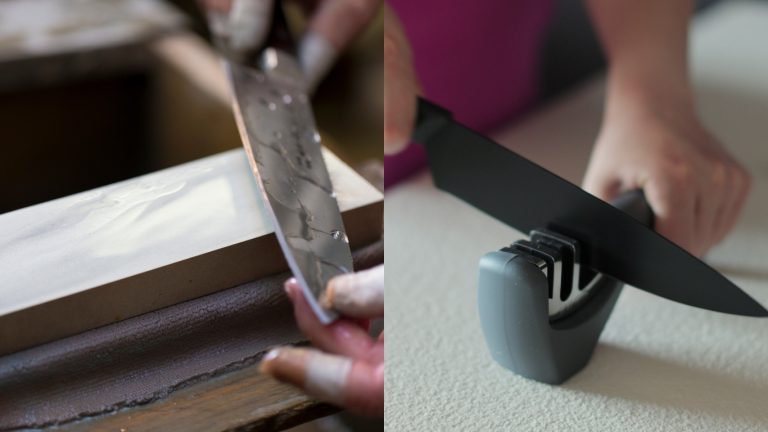
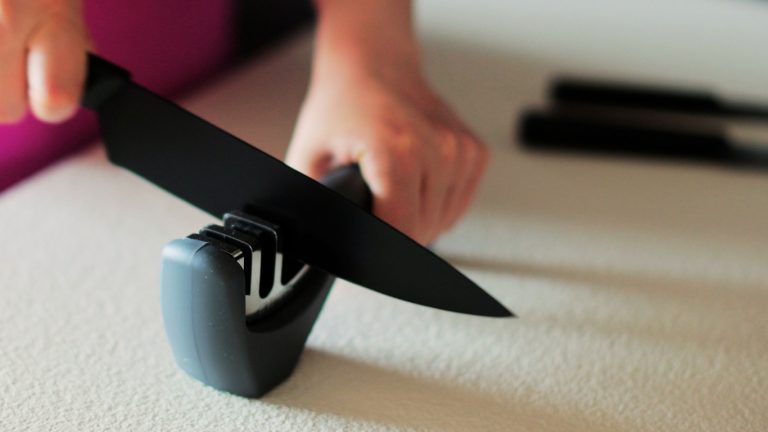
Hold the knife at a consistent 15-20° angle per side, using an angle guide if needed. Start sharpening with coarse whetstones, then progress through medium to fine grits, using heel-to-tip slicing strokes and moderate pressure. Maintaining the correct sharpening angle is crucial to avoid edge damage and ensure optimal performance.
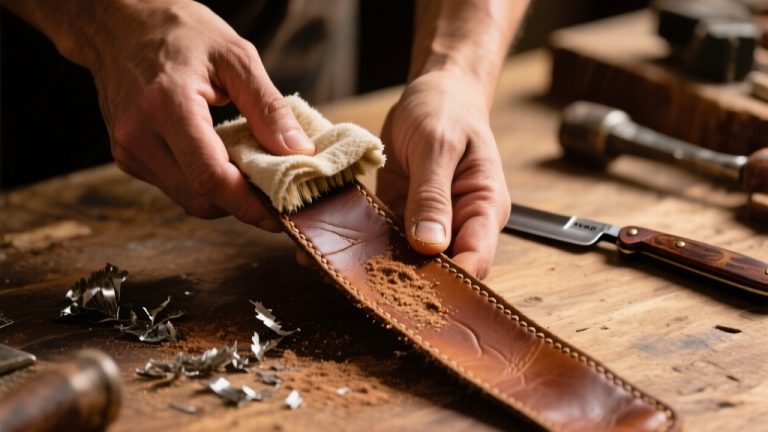
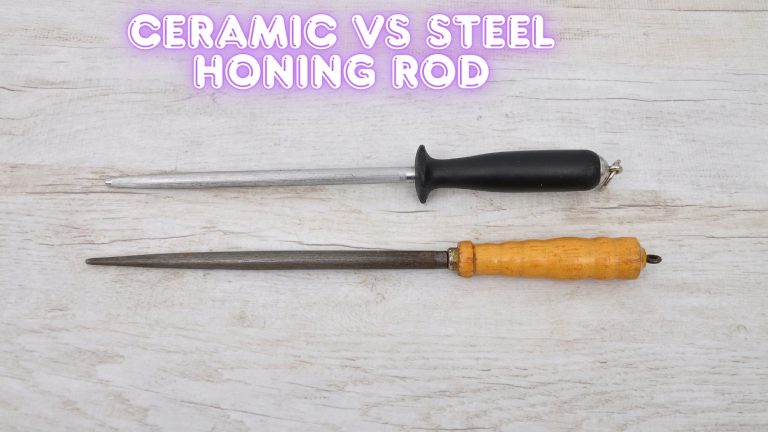
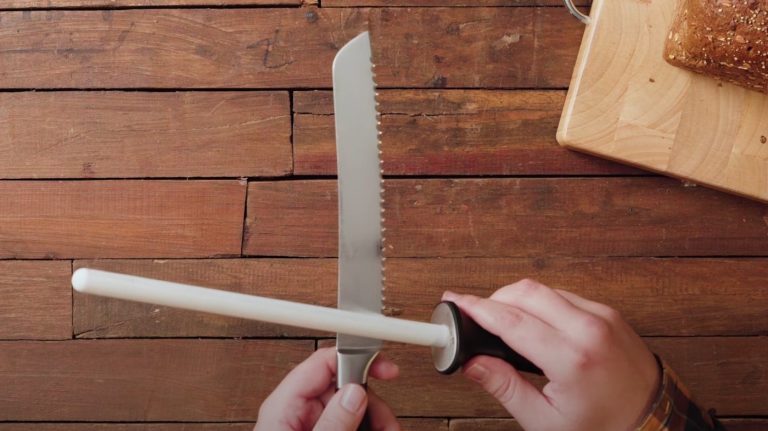
Detect and remove burrs by switching sides and finishing on finer stones. Hone your blade before each use with a ceramic hone or leather strop, matching the sharpening angle to realign the edge.
| Step | Grit Range | Purpose |
|---|---|---|
| Coarse | 220 – 400 | Edge repair |
| Medium | 1000 | Edge refinement |
| Fine | 3000 – 6000 | Polishing for vegetables |
| Super Fine | 6000 – 10000 | Polishing for meats/fish |
| Honing | Ceramic/leather | Edge realignment |
Frequently Asked Questions
Can I Use a Carbon Steel Knife for Cutting Frozen Foods?
You shouldn’t use a carbon steel knife for cutting frozen foods.
The hardness of frozen items can easily chip or break the fragile high-carbon edge, causing damage that’s costly to repair.
Instead, use a specially designed frozen food knife or an old, thick-bladed knife for these tasks.
Carbon steel knives excel at sharpness and edge retention but aren’t built to handle the extreme toughness of frozen ingredients.
Protect your blade by avoiding hard cuts.
What Is the Best Way to Develop a Patina on My Carbon Steel Knife?
The best way to develop a patina on your carbon steel knife is to repeatedly dip it in diluted white vinegar for short intervals.
Then rinse and thoroughly dry it each time to avoid rust. You can also soak it in strong instant coffee for 6–24 hours for a natural tannin-based patina.
Afterward, keep it oiled and dry to maintain the protective layer and prevent red rust forming.
How Often Should I Replace the Handle of a Carbon Steel Knife?
You should replace your carbon steel knife handle when you notice visible damage like cracks, gaps, or loosening rivets that affect stability and cutting precision.
Wobbly or severely damaged handles pose safety risks and reduce the knife’s lifespan.
Generally, heavy-use knives may need handle replacement every five to ten years.
Regularly inspect the handle junction for moisture and wear, and address issues promptly to keep your knife reliable and safe.
Are There Any Foods That Damage Carbon Steel Knives More Than Others?
Some foods aren’t exactly kind to your carbon steel knife.
Citrus fruits, tomatoes, vinegar-based dishes, and fermented or pickled foods bring acids that can cause corrosion and staining.
Onions, garlic, and cabbage encourage dark patinas and persistent stains.
Sugary fruits like berries can leave sticky residues that trap moisture.
To keep your blade sharp and rust-free, rinse and dry it immediately after cutting these ingredients.
Develop a protective patina through regular care.
Can I Use Cooking Oils Other Than Mineral or Camellia Oil on My Knife?
You can use some cooking oils like vegetable, canola, or coconut oil on your knife, but they’ve drawbacks.
Olive oil and extra virgin olive oil tend to go rancid, causing sticky residue and unpleasant smells.
Sunflower oil oxidizes and discolors the blade.
For consistent protection and moisture resistance, it’s best to stick with mineral or camellia oil, as they’re non-toxic, stable, and specifically designed for carbon steel knives.
Ready to Perfect Rust-Free Knife Maintenance?
Caring for your carbon steel knife is like nurturing a trusted companion. Consistent cleaning, thorough drying, and regular oiling keep rust at bay and the edge sharp.
Treat it well, and it’ll slice through tasks like a hot knife through butter. Remember, neglect invites corrosion, dullness, and frustration.
By following these simple yet essential steps, you make certain your blade remains a reliable tool. It will be ready to perform with precision whenever you need it.