Is 440 Stainless Steel Good for Knives: What You Need to Know
If you choose 440 stainless steel for knives, especially 440C, you get excellent hardness (up to 60 HRC) and reliable corrosion resistance due to its high chromium content.
It holds an edge well but can chip if misused. Proper heat treatment is key for balancing toughness and wear resistance.
Although not ideal for heavy-impact tasks, it suits kitchen and pocket knives requiring sharpness and moderate durability. Understanding its precise properties will clarify if it fits your needs.
Key Takeaways
- 440 stainless steel, especially 440C, offers high hardness (up to 60 HRC) suitable for good edge retention in knives.
- Its chromium content provides moderate corrosion resistance, ideal for kitchen and outdoor knives with proper maintenance.
- 440 steel knives balance hardness and toughness but can chip under heavy impact or lateral stress.
- Sharpening 440 stainless steel is more challenging due to its hardness but results in longer-lasting edges.
- Not recommended for heavy-duty tasks like batoning, but excellent for slicing and general cutting applications.
Composition and Variants of 440 Stainless Steel
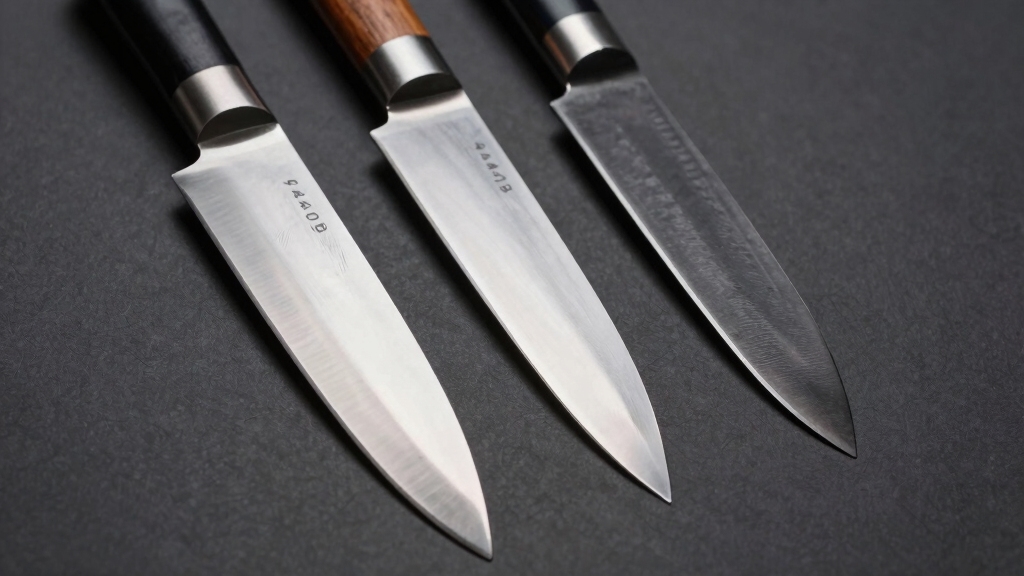
Understanding the composition and variants of 440 stainless steel is essential when selecting materials for knives that demand both hardness and corrosion resistance.
Knowing 440 stainless steel’s composition is key for knives needing hardness and corrosion resistance
You’ll find 440 stainless steel contains 0.95-1.20% carbon and 16.00-18.00% chromium, providing a balanced mix that guarantees stainless properties despite high carbon content. Its corrosion resistance is generally moderate, making it suitable for a variety of environments but requiring proper maintenance.
Manganese, silicon, and molybdenum appear in smaller amounts, optimizing strength and corrosion resistance.
The 440 series includes variants like 440C, which has the highest carbon level for maximum hardness, and lower-carbon versions 440A and 440B.
All variants maintain moderate corrosion resistance in mild environments, such as fresh water, mild acids, and foods.
Additionally, 440 steel is magnetic across all conditions and meets standards like UNS S44004 and ASTM A276, assuring consistent quality for knife applications.
Its typical hardness range can reach 50–60 HRC after heat treatment, making it ideal for knives requiring excellent edge retention.
Hardness and Heat Treatment Processes
The carbon and chromium content in 440 stainless steel directly influences its hardness and response to heat treatment. 440A, with lower carbon, typically reaches 56-58 HRC after tempering around 300-350°F, balancing toughness and hardness.
Increasing carbon in 440B and 440C raises hardness to 58-60 HRC, approaching the upper limit for stainless knife steels. Heat treatment involves austenitizing followed by quenching to form martensite, then tempering between 400-800°F to reduce brittleness while maintaining hardness around Rockwell C55-56.
Cryogenic treatment can enhance dimensional stability post-tempering. However, exceeding 60 HRC risks brittleness and chipping, especially in higher carbon variants. You must carefully control heat treatment parameters to optimize hardness without compromising toughness, ensuring the steel performs reliably in knife applications.
Compared to steels like VG10, 440 stainless steel offers reliable corrosion resistance but generally lower wear resistance and edge retention.
Edge Retention and Wear Resistance

Edge retention in 440 stainless steel, particularly 440C, hinges on its high hardness and carbide composition. This allows the blade to maintain sharpness through demanding cutting tasks.
With carbon content between 0.95-1.20%, 440C achieves hardness levels near the upper range of knife steels via hardening at 1010-1065°C and quenching. This provides superior edge retention over steels like 1095. However, it’s important to note that higher hardness often results in reduced toughness, meaning 440C can be more prone to chipping compared to tougher steels. Its corrosion resistance is enhanced by the high chromium content, which helps protect the blade in wet environments and prolongs its service life through the formation of a passive oxide layer.
You’ll see retention amplified by optimized edge geometry. For example, a 10-degree per side edge can hold sharpness five times longer than a 25-degree edge in comparable steels.
Wear resistance benefits from a robust microstructure with minimal impurities and vanadium carbides enhancing hardness. This combination guarantees durability during heavy use.
However, the increased hardness complicates sharpening, requiring precise maintenance to preserve edge performance. Sharpening difficulty often inversely correlates with edge retention, making 440C more challenging to sharpen compared to lower hardness steels.
Corrosion Resistance in Knife Applications
While 440 stainless steel’s hardness and carbide structure deliver impressive edge retention, its corrosion resistance plays an equally significant role in knife performance.
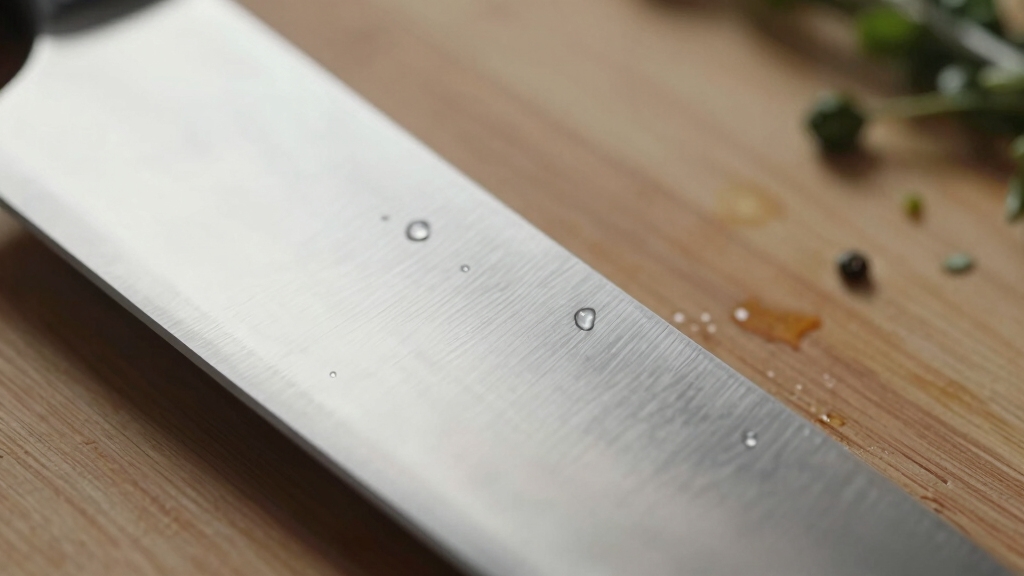
Its high chromium content forms a protective oxide film, resisting uniform corrosion in dry or mildly humid conditions. However, you must avoid prolonged exposure to chloride-rich environments like seawater, where pitting and crevice corrosion can develop. Additionally, the martensitic group classification of 440C contributes to its high hardness and corrosion resistance characteristics. Proper heat treatment and polishing processes also influence the corrosion resistance and overall blade durability.
Proper heat treatment and mirror polishing enhance corrosion resistance by refining the passive film.
| Condition | Corrosion Behavior |
|---|---|
| Dry/Mild Humidity | Stable passive film, low risk |
| Chloride-Rich (e.g., seawater) | Pitting and crevice prone |
| Improper Heat Treatment | Degraded chromium layer |
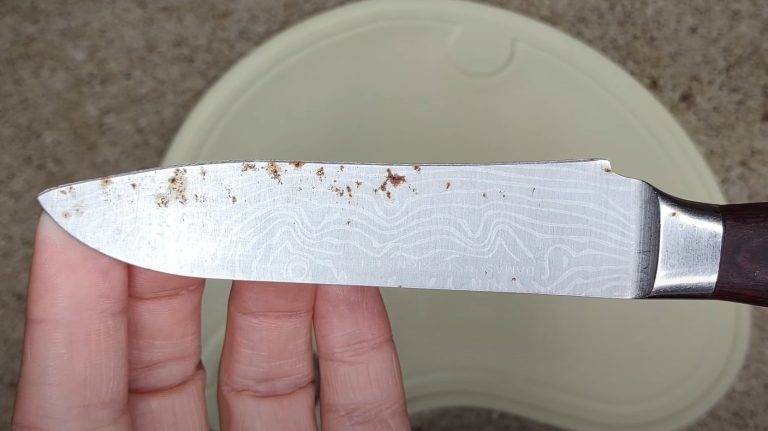
| Neglected Cleaning | Surface rust and tea-staining |
You should maintain blades promptly to preserve their protective layer.
Mechanical Properties and Practical Knife Uses

Because 440 stainless steel balances high hardness with moderate toughness, you’ll find it excels in applications demanding strong edge retention but less impact resistance. Its corrosion resistance is enhanced by a chromium content similar to other stainless steels, providing protection against rust in everyday use.
440 stainless steel offers excellent edge retention with moderate toughness, ideal for cutting over heavy impact tasks.
Specifically, 440C achieves hardness around HRC 58–60 after heat treatment, offering excellent wear resistance and edge retention for slicing and sustained cutting tasks.
However, its moderate to low toughness means it’s prone to chipping under impact or lateral stress, making it unsuitable for heavy-impact uses like batoning or prying. You should temper carefully to optimize hardness without excessively sacrificing toughness.
Additionally, 440’s wear resistance supports frequent use in kitchen or pocket knives. Its development was driven by the need for an alloy combining hardness, corrosion resistance, and edge retention.
Frequently Asked Questions
How Does 440 Stainless Steel Compare to Other Knife Steels in Price?
You’ll find 440 stainless steel knives priced lower than premium steels like S30V or CPM variants, often costing half or less.
Compared to lower-grade steels like 420 or 440A/B, 440C is pricier due to better alloying and heat treatment demands. This usually adds $10–$100 per knife.
Can 440 Stainless Steel Knives Be Sharpened at Home Easily?
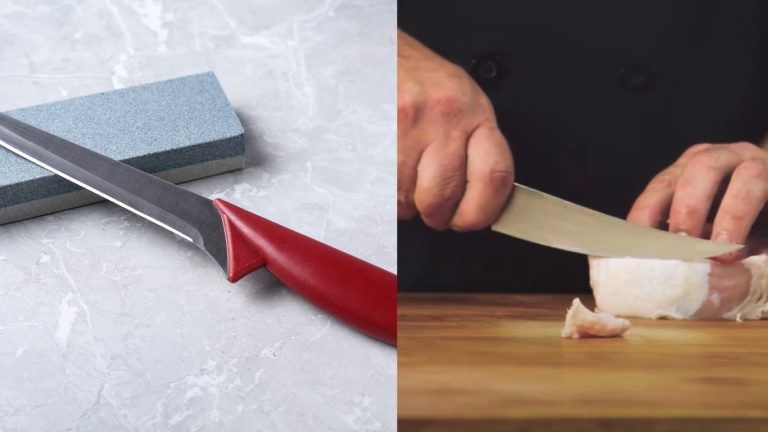
Yes, you can sharpen 440 stainless steel knives at home with ease.
Using diamond stones is ideal because their hardness efficiently sharpens 440 steel with minimal effort and light pressure.
Alternatively, guided sharpeners offer precise angle control, restoring edges consistently.
Whetstones also work well if you carefully manage pressure and grit progression.
Avoid aggressive methods that could strip the blade; with proper technique, you’ll maintain a sharp, durable edge conveniently.
What Is the Typical Lifespan of a 440 Stainless Steel Knife?
Imagine your knife slicing smoothly for years.
Typical 440 stainless steel knives last 5 to 15 years with regular kitchen use and proper maintenance.
If you sharpen, clean, and dry it consistently, you’ll extend its life markedly.
For occasional users, a well-made 440C blade can function effectively for decades.
However, heavy abuse or neglect shortens lifespan due to edge wear, chipping, or corrosion.
Your care directly impacts durability.
Are 440 Stainless Steel Knives Safe for Food Preparation?
Yes, 440 stainless steel knives are safe for food preparation. They meet FDA and global food safety standards due to their high chromium content, ensuring corrosion resistance and non-toxicity.
You’ll benefit from excellent wear resistance, minimal flavor transfer, and strong resistance to acids and moisture. Just remember to maintain them properly in dry conditions to prevent corrosion, especially in humid environments.
Their performance supports hygienic, reliable food processing applications.
Do 440 Stainless Steel Knives Require Special Maintenance or Cleaning?
Yes, 440 stainless steel knives require special maintenance.
You should rinse them promptly after exposure to saltwater or acidic foods to prevent corrosion.
Always hand-wash with mild soap and dry thoroughly, especially at pivots and joints.
Regularly apply a thin coat of food-safe oil for protection.
Sharpening 440C variants demands finer abrasives or professional tools due to hardness.
Avoid dishwashers and high-temperature sharpening to maintain edge integrity and steel hardness.
Ready to Upgrade to 440 Stainless Steel?
If you’re weighing 440 stainless steel for your next knife, know this: its balance of hardness, corrosion resistance, and edge retention isn’t just good—it’s calculated for performance.
But here’s the catch. While variants like 440C excel in toughness, others might fall short under heavy use.
The real question is whether your cutting needs demand that precise blend of durability and sharpness. Choose wisely, because not all 440 steels are made equal.