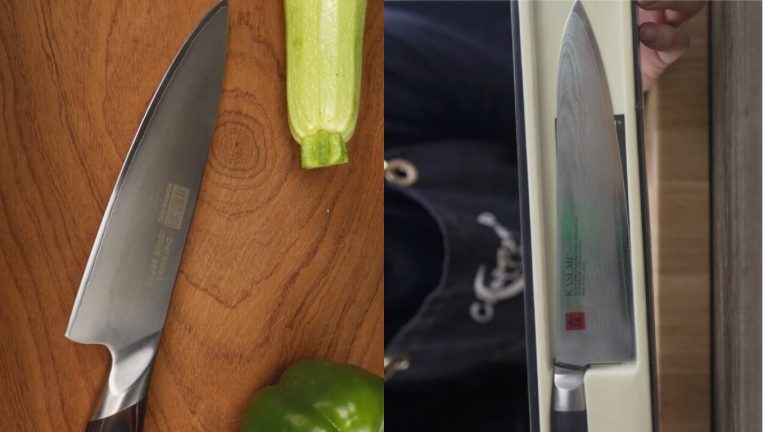
10 Inch vs 8 Inch Chef Knife: Pick the Perfect Blade
If you often prep large ingredients like roasts or pumpkins, a 10-inch chef knife boosts efficiency with fewer, powerful strokes. However, it demands more wrist strength and control.
An 8-inch blade, lighter and more balanced, gives you better maneuverability and precision for everyday tasks like mincing and detailed slicing.
Your hand size and comfort also matter; smaller hands favor the 8-inch for safer handling. Understanding these differences helps you pick the best fit for your cooking style.

- QUALITY CONSTRUCTION: Knife is crafted with one-piece high-carbon Japanese steel for easy edge…
- SUPERIOR DESIGN: Built to last ergonomic handle with textured finger points offers a non-slip grip…
- BEST USE: The perfect knife for chopping, mincing, and cutting. Ideal for dicing onions, mincing…
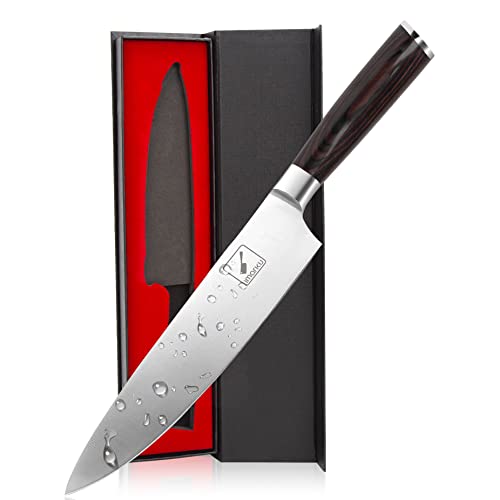
- High-Carbon Stainless Steel Blade: It is manufactured from high-quality stainless steel that…
- Multi-functional Knife: The gyutou knife is classified and designed to be a multipurpose knife for…
- Ergonomic Pakka Handle: To make it more professional and minimize any fatigue, finger numbness or…
Key Takeaways
- A 10-inch chef knife excels at slicing large items with fewer strokes, ideal for bulk prep and heavy-duty tasks.
- An 8-inch knife offers superior maneuverability and balance, perfect for precise cutting and everyday kitchen tasks.
- Larger 10-inch knives require more wrist strength and control, potentially causing fatigue during extended use.
- The 8-inch blade suits smaller hands better, enhancing comfort and reducing slip risk during intricate work.
- Owning both sizes covers a range of cutting needs, from delicate mincing to powerful slicing of big ingredients.
Blade Length and Its Impact on Kitchen Tasks
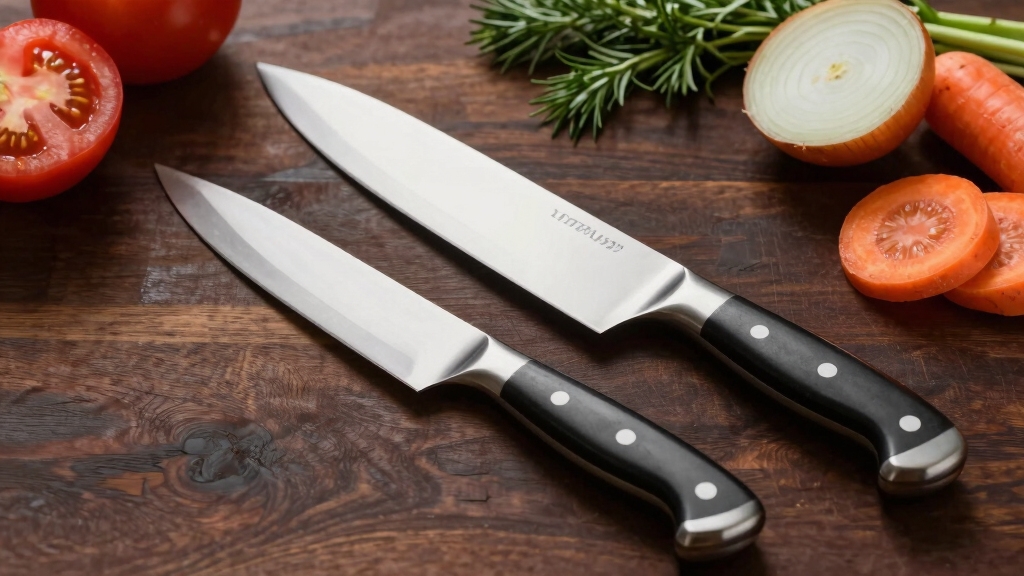
While both 10-inch and 8-inch chef knives serve essential roles in the kitchen, their blade lengths distinctly influence how you approach various tasks.
Both 10-inch and 8-inch chef knives are vital, their blade lengths shaping your cutting technique and kitchen approach.
The 10-inch blade, measuring around 25-26 cm, offers a larger cutting surface that suits long, continuous slicing motions. This reduces strokes on large items like roasts or big vegetables, excelling in bulk prep and boosting efficiency when handling sizable ingredients. Professional chefs often favor 10- and 12-inch blades for their ability to handle thick vegetables and large cuts of meat with power and efficiency larger blades. The blade design and weight balance also affect the knife’s control and cutting style, with longer blades typically allowing for more forceful slicing.
Conversely, the 8-inch blade, about 20 cm long, strikes a balance between length and maneuverability. It enables versatile chopping, slicing, and dicing, encouraging a rocking motion that aids smooth, precise cuts, especially on smaller or delicate ingredients. This length is often preferred for its balance and handling, providing agility and comfort during extended kitchen tasks.
Control and Maneuverability Differences
When you’re picking out a chef knife, the size really matters, especially when it comes to how it feels in your hand. If you’ve got smaller hands, you might find that an 8-inch knife is just the right fit. It’s lighter and offers a nice balance, which means you can make those precise cuts with ease. This size is also considered the golden size for home kitchens, as it suits approximately 99% of cutting tasks. Additionally, the sharpening angle used on these knives often affects how easily you can maintain the blade’s edge.
Now, on the other hand, if you go for a 10-inch knife, you’ll notice that the longer blade changes things up a bit. It does require a bit more control, and if you’re trying to tackle intricate tasks, it can feel a bit clunky. So, really think about what you’ll be using it for and how comfortable it feels when you’re handling it!
Hand Size Impact
Understanding how your hand size affects control and maneuverability can greatly improve your knife skills.
If you have smaller hands, you’ll find an 8-inch blade offers better grip comfort and enhanced maneuverability for intricate cuts. Smaller blades also reduce fatigue when performing delicate cuts.
In contrast, larger hands handle 10-inch knives more securely, leveraging greater cutting power and reach.
Using a knife too long for your hand leads to fatigue, reduced control, and increased risk of slips.
You’ll also struggle with maneuvering a 10-inch blade in confined spaces or during quick chopping due to its weight and length.
Choosing a knife with full tang construction provides better balance and sturdiness, which is especially important for larger blades like the 10-inch.
Prioritizing ergonomic fit, matching blade length to your forearm length and hand size, ensures ideal balance and grip stability.
Cutting Precision
Because blade length directly influences how you control and maneuver a knife, choosing between an 8-inch and a 10-inch chef knife markedly affects your cutting precision. The 8-inch blade offers superior balance and agility, allowing you to execute detailed, intricate cuts with greater ease and control. Its moderate weight and well-centered balance support steady hand motions, enhancing precision in tasks like mincing herbs or trimming pastry. Many users appreciate knives that combine traditional craftsmanship with ergonomic design, which can further improve handling in smaller blades.
Conversely, the 10-inch blade excels at large, sweeping cuts, reducing stroke count and effort on bulky items but sacrificing micro-control and responsiveness. Its heavier weight and extended length decrease maneuverability, making quick directional changes and fine work more challenging. Additionally, the 10-inch blade is best suited for those with larger hands who can leverage its size effectively. Knives constructed from high-performance steel often maintain sharpness longer, which can be advantageous when working with larger blades.
Weight Considerations and User Fatigue
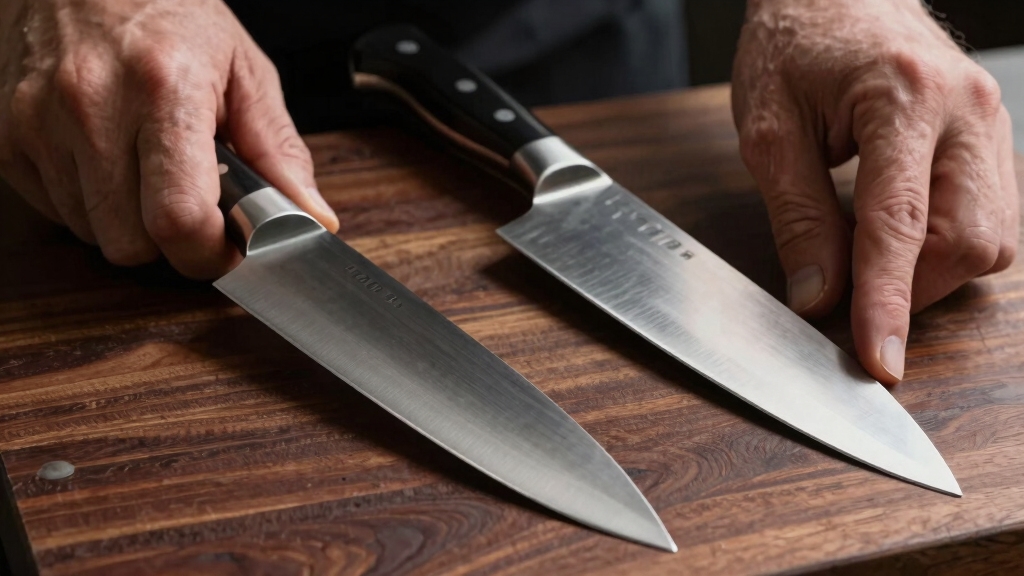
When you’re shopping for a chef knife, you’ll probably notice that a 10-inch knife typically weighs more than an 8-inch one. This extra weight can actually give you more cutting power, which sounds great, right? But here’s the catch: it can also make your wrist and forearm tire out faster during those long cooking sessions. The overall weight impacts handling, affecting both fatigue and precision during extended prep times. Choosing a knife with an ergonomic handle design can help reduce discomfort and maintain control despite the size difference.
Weight Differences Explained
Consider how the weight difference between a 10-inch and an 8-inch chef knife influences your cutting experience.
A 10-inch knife, heavier due to its longer blade and material volume, adds downward force that aids chopping dense ingredients. However, its weight can challenge precise control, especially if balance shifts blade-heavy, increasing wrist strain. Proper weight distribution can mitigate fatigue and improve handling during extended use.
Conversely, the lighter 8-inch knife offers enhanced maneuverability and tactile feedback, making it ideal for fine slicing and intricate cuts.
Weight distribution plays a critical role; an 8-inch knife often balances closer to the handle, improving comfort and control. The handle shape and size are designed to fit comfortably and allow easy manipulation of the knife, which can reduce fatigue during prolonged use handle shape & size.
Material density, handle design, and blade thickness also affect weight and balance. Understanding these differences helps you select a knife that matches your cutting style and task requirements.
This knowledge optimizes efficiency and precision without compromising control.
Impact on User Fatigue
While larger chef knives like the 10-inch model demand more forearm muscle engagement, they can cause greater fatigue during extended use compared to smaller 8-inch knives.
The 10-inch blade’s weight and length increase cumulative muscle workload, leading to broader arm fatigue despite reducing repetitive hand motions. Additionally, the balance point of the handle relative to the blade can shift perceived weight, affecting recovery speed and fatigue levels. Maintaining a sharp knife reduces the effort needed for cutting, which can help mitigate some fatigue caused by heavier blades.
Conversely, an 8-inch knife relies more on intrinsic hand muscles, which may tire faster during intricate tasks but generally causes less overall arm strain.
Your choice should consider task volume and type: prolonged heavy chopping favors the 10-inch for fewer strokes but risks arm fatigue, while detailed, frequent directional cuts benefit from the 8-inch’s maneuverability and reduced localized fatigue.
Proper grip ergonomics also play a vital role in minimizing fatigue across both sizes by optimizing muscle load distribution.
Balancing Power and Comfort
Understanding how knife weight and balance impact your cutting experience helps you manage fatigue and maintain control. Both Zwilling and Wüsthof knives feature full-tang construction that contributes to overall stability and balance.
An 8-inch chef knife typically weighs around 200g, hitting a sweet spot that balances power and comfort, with balance points near the handle for precise control.
In contrast, 10-inch knives often weigh over 250g, with blade-heavy distribution that increases cutting force but demands more wrist effort. The position of the balance axis relative to the user’s pivot point strongly influences how tiring the knife feels during use.
Heavier knives reduce exertion in chopping but can cause quicker fatigue during extended use.
Ergonomic handles and full tang construction aim to distribute weight evenly, reducing strain.
If you prioritize power for tough tasks, a 10-inch knife suits you but be prepared for increased arm fatigue.
For longer sessions requiring finesse and comfort, the lighter, better-balanced 8-inch blade minimizes user fatigue without sacrificing control.
Versatility for Various Cooking Needs
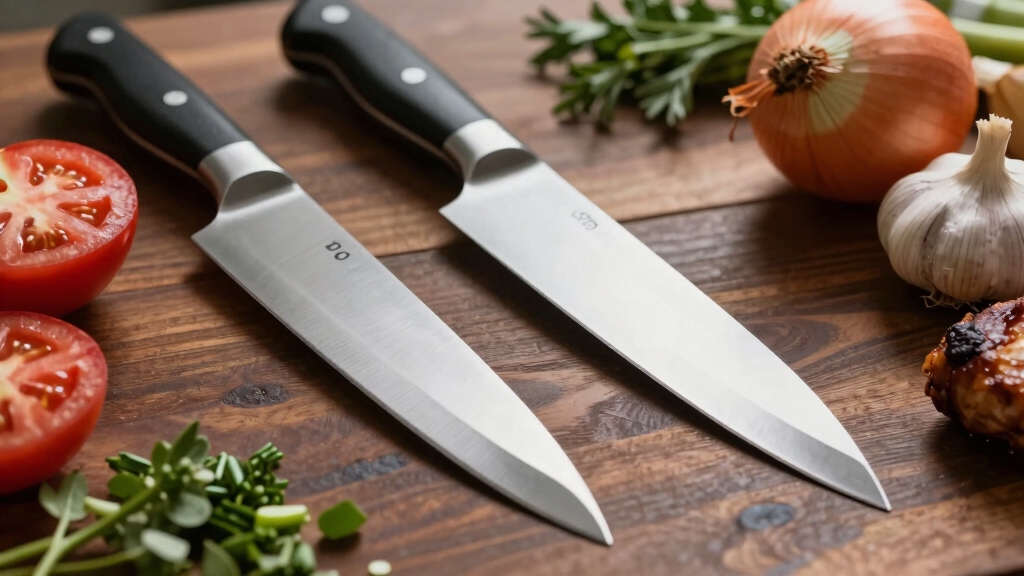
Because blade length directly affects how you handle different kitchen tasks, choosing between an 8-inch and 10-inch chef knife hinges on your specific cooking needs.
Blade length shapes your kitchen technique, so pick an 8-inch or 10-inch chef knife based on your cooking needs.
The 8-inch knife offers balanced versatility, excelling in precision tasks like mincing herbs and maneuvering tight spaces with a rocking motion. It’s ideal for everyday use, handling roughly 80% of kitchen prep efficiently. For most home cooks, the 8-inch is recommended first to master technique and build confidence before considering a larger size. Using long, smooth strokes rather than sawing motions helps maximize control and precision with this size.
Meanwhile, the 10-inch blade suits bulk preparation and large items, enabling fewer, longer slicing strokes that speed up cutting big vegetables or meats. Its size provides leverage but reduces agility in confined areas.
Your hand size and cooking style also matter: smaller hands favor the nimble 8-inch, while larger hands benefit from the extended reach and power of the 10-inch.
For diverse kitchens, having both covers precision and volume needs effectively. Owning both knives offers complete size versatility for every kitchen task.
Safety Factors When Using Different Knife Sizes
Choosing the right chef knife size markedly impacts your safety in the kitchen. An 8-inch knife offers better maneuverability and control, reducing slips and fatigue, especially in confined spaces. A 10-inch knife, while providing a larger cutting surface, demands greater strength and skill, increasing injury risk if mishandled. Additionally, the weight and balance of the knife influence how securely you can handle it during cutting tasks.
Consider these safety factors:
8-inch knives minimize wrist strain and keep blade tips close to your hand for precise cuts. They also tend to be lighter, which helps reduce fatigue during extended use, unlike larger knives that can weigh significantly more (weight difference).
10-inch knives require more counter space, risking unstable angles. Their heavier blades can cause hand fatigue, lowering accuracy over time.
Wider 10-inch blades can protect fingers if used correctly but need careful technique.
Beginners and those with smaller hands maintain safer grips using 8-inch knives.
Select your knife size based on control needs to optimize safety.
Skill Level Requirements for Each Knife Size
While both 8-inch and 10-inch chef knives serve essential roles in the kitchen, your skill level considerably influences which size will suit you best.
If you’re a beginner or intermediate cook, an 8-inch knife offers better control and versatility, allowing you to develop fundamental skills safely. Its balanced weight and blade length suit most everyday tasks, helping you master precise cuts quickly. The 8-inch chef knife is widely recommended as a kitchen workhorse due to its versatility and suitability for chopping vegetables and handling various proteins.
Conversely, the 10-inch knife demands advanced control and strength due to its longer, heavier blade. It’s ideal if you regularly handle large ingredients or complex cuts, like breaking down meat.
Using a 10-inch blade requires proficiency in rocking and slicing techniques to maintain safety and efficiency. Ultimately, starting with an 8-inch knife guarantees smoother skill progression before advancing to the challenges of a 10-inch model.
Hand Size and Comfort Compatibility
Hand size is super important when you’re picking between an 8-inch and a 10-inch chef knife. It really affects how comfortable you feel and how well you can control the knife.
If you have smaller hands, you’ll probably find that shorter blades with slimmer handles are easier to manage. On the other hand, if your hands are on the larger side, you might need the extra length and thicker grip that comes with bigger knives.
Finding the right match between blade length and handle design for your hand is key. This way, you can cut down on fatigue and keep your precision sharp, especially during those long cooking sessions. For most kitchen tasks, a standard length: 20 cm blade is considered perfect, making the 8-inch knife a common and versatile choice.
Hand Size Considerations
Because hand size directly affects grip and control, selecting a chef knife that matches your hand dimensions is essential for comfort and precision.
If your hands are medium to large, an 8 to 10 inch blade will feel balanced and allow full leverage. Smaller hands benefit from shorter blades, typically 6 to 7 inches, to maintain secure grip and accurate tip control.
Consider these points:
Pinch grip should allow your hand to wrap fully around the handle. Handles too thick reduce control for smaller hands.
Larger hands handle longer blades with less wrist strain. Smaller hands risk instability with a 10 inch blade.
Matching bolster-to-handle length with hand span optimizes leverage. Choosing the right blade guarantees efficient, precise cutting tailored to your hand size.
Additionally, the ideal weight of a knife should be a middle-ground suited to individual preference to prevent fatigue or loss of control during extended use.
Comfort in Use
Matching your knife choice to your hand size sets the foundation for comfort. The knife’s weight and balance also play significant roles in how comfortable it feels during use.
If you have smaller or medium hands, an 8-inch knife’s lighter weight and better balance reduce fatigue and enhance control, especially during intricate or repetitive tasks. The 8-inch model’s center of gravity located at the bottom of the bolster contributes to its overall best feel.
Conversely, a 10-inch knife’s longer blade and heavier weight demand more wrist strength and skill, which may decrease comfort during prolonged use.
While the 10-inch offers greater leverage for bulk cutting, it requires adjusted grip and hand positioning that might strain you initially.
Ultimately, selecting the right knife means balancing hand size with the knife’s ergonomics, weight distribution, and your cutting style to maximize comfort and efficiency in the kitchen.
Cutting Techniques Suited to Each Blade Length
Although both 8-inch and 10-inch chef knives perform a range of cutting tasks, their blade lengths distinctly influence the techniques you use.
The 8-inch blade excels in precise, controlled cuts and quick, repeated chopping. The 10-inch blade leverages length for sweeping, powerful strokes. Adjust your approach according to blade size:
Use rocking motions on the 8-inch for herbs and fine dicing. Employ longer rocking arcs on the 10-inch for large vegetables. Understanding blade shape can be the difference between culinary success and failure.
Opt for push and pull cuts with the 8-inch in tight spaces. Use single-pass slicing with the 10-inch on roasts or melons.
Choose the 8-inch for delicate trimming and the 10-inch for heavy chopping. Tailoring your technique maximizes efficiency and safety for each blade length.
Efficiency in Handling Large vs Small Ingredients
The cutting techniques you use naturally align with the size of the ingredients you handle. When working with large items, a 10-inch chef knife lets you slice through pumpkins or roasts in fewer strokes, saving time but requiring more strength. The 10-inch knife is particularly favored in professional kitchens for its cutting power and efficiency in bulk preparation.
For small to medium ingredients, an 8-inch knife offers better control, precision, and less fatigue, ideal for dicing or slicing with ease.
| Aspect | 10-Inch Chef Knife | 8-Inch Chef Knife |
|---|---|---|
| Blade Length | Long, ideal for large items | Balanced, good for small tasks |
| Control | Less precise, requires skill | High precision and control |
| Efficiency | Faster on big cuts | Versatile for varied prep |
| Fatigue | More tiring over time | Less tiring, better ergonomics |
| Safety | Needs careful handling | Safer for delicate work |
Choosing the Right Knife Based on Cooking Style
When you pick a chef knife, you should zero in on how your cooking style influences your choice. Your knife’s length and design directly affect precision, control, and efficiency.
Selecting a chef knife hinges on your cooking style, as length and design shape precision and control.
Consider these factors:
Use an 8-inch knife for nimble tasks like fine slicing, mincing herbs, and medium-sized ingredients. Opt for a 10-inch knife if you handle large proteins or batch prep with long, rocking cuts. For extended prep work and breaking down larger cuts, blades in the 8–10 inch range provide better leverage and efficiency.
Match blade size to your hand for comfort and safety; smaller hands favor shorter blades. Prioritize blade shape—curved for rocking cuts, narrower for slicing raw fish or poultry.
Factor in your cooking volume; frequent, high-volume cooks gain efficiency with longer blades. Aligning knife choice with your culinary methods guarantees safer, more effective prep tailored to your kitchen demands.
Frequently Asked Questions
How Should I Care for and Sharpen Each Knife Size?
You should sharpen your 8-inch knife more often, every 3-6 months, using a whetstone or honing rod for precise edge control.
With the 10-inch, sharpen less frequently but carefully maintain a consistent angle along its length, especially under heavy use.
Hand wash both knives immediately after use, dry thoroughly, and store them properly.
Avoid dishwashers and twisting motions to prevent damage and keep your blades sharp and safe.
What Are the Best Storage Options for 8-Inch Vs 10-Inch Knives?
For storing your 8- and 10-inch knives, choose knife blocks with larger or universal slots to fit bigger blades comfortably.
Magnetic racks, especially wooden ones, save counter space and protect edges. Make certain secure mounting for heavier knives.
Drawer organizers need custom sizing for longer knives and work best paired with sheaths to prevent dulling.
Each method balances accessibility, blade protection, and kitchen space. Select based on your kitchen layout and knife usage frequency.
Do 8-Inch or 10-Inch Knives Differ in Blade Material or Durability?
You won’t find a difference in blade material between 8-inch and 10-inch knives if they’re from the same line; both use similar high-quality stainless steel alloys ensuring corrosion resistance and edge retention.
Durability depends more on blade thickness, heat treatment, and handle construction than size.
While 10-inch blades may flex slightly more if thinner, professional models maintain rigidity.
Ultimately, your handling and sharpening habits will impact durability more than blade length.
Are There Specific Brands Known for Quality 8-Inch or 10-Inch Chef Knives?
You want reliability, craftsmanship, and performance. Brands like Zwilling J.A. Henckels and Wusthof deliver all three with their German-made 8- and 10-inch chef knives.
For sharper edges and lighter blades, Shun and Global excel in 8-inch sizes. These renowned Japanese brands are known for their quality.
Boutique labels like MAC Knives and Our Place offer quality and modern design, mainly in 8-inch models.
Choosing depends on your balance preference, blade hardness, and maintenance willingness.
How Does the Handle Design Vary Between 8-Inch and 10-Inch Knives?
You’ll find that handle design between 8-inch and 10-inch chef knives stays largely consistent in length and thickness, focusing on ergonomic comfort rather than scaling with blade size.
The 8-inch often offers better grip control for smaller hands, while the 10-inch handle balances heavier blades for longer use.
Both use durable materials and full-tang construction for stability, with slight contour differences optimizing comfort and leverage according to blade length.
Upgrade Your Kitchen with the Right Chef Knife Size
Choosing between a 10-inch and an 8-inch chef knife is like picking the right dance partner. Each moves differently in your hands.
The 10-inch offers reach and power for big jobs, while the 8-inch excels in control and finesse.
By weighing your cooking style, hand size, and task demands, you’ll find the perfect balance of efficiency and comfort.
Remember, the right knife sharpens not just ingredients but your kitchen confidence too.

- QUALITY CONSTRUCTION: Knives are crafted with high-carbon Japanese steel for easy edge maintenance…
- SUPERIOR DESIGN: Built to last ergonomic handles with textured finger points offer a non-slip grip…
- BEST USE: The perfect knife for chopping, mincing, and cutting. Ideal for dicing onions, mincing…
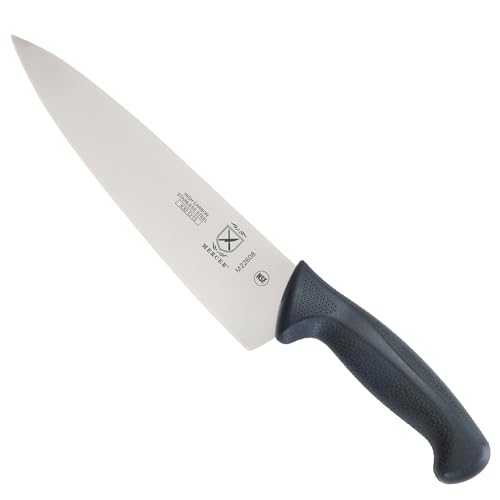
- QUALITY CONSTRUCTION: Knife is crafted with one-piece high-carbon Japanese steel for easy edge…
- SUPERIOR DESIGN: Built to last ergonomic handle with textured finger points offers a non-slip grip…
- BEST USE: The perfect knife for chopping, mincing, and cutting. Ideal for dicing onions, mincing…
Last update on 2026-03-21 / Affiliate links / Images from Amazon Product Advertising API